 Smart Home
 Table of Contents
Every “best smart home devices” list we have read this year grades gadgets one at a time. That is not how a house works. A dimmer that is brilliant on its own and invisible to your thermostat’s app is a dimmer you will stop using by Thanksgiving. So this guide, written in September 2026 from the vans that install this equipment across Bucks and Montgomery County, asks one question of every device: does it work with everything else you are going to own?
We are an electrical contractor and an IT shop under one roof, so we see both halves of the problem: switch boxes with no neutral wire on one side, three apps and two hubs on the other. Here is what we would buy in each category right now, with real model names and real prices.
What “Works Together” Means in September 2026
The reason this guide is possible at all is Matter, the shared smart home language that Apple, Google, Amazon, and Samsung all agreed to speak. Matter 1.5 landed in November 2025 and finally added cameras and doorbells, 1.5.1 cleaned up the video handling in March 2026, and Matter 1.6 was published on June 22, 2026. Thread is the low-power radio mesh most battery-powered Matter devices use, and it needs a “border router” somewhere in the house to reach your network.
The caveat the marketing leaves out: the specification is ahead of the platforms. As of this month, Samsung SmartThings is the only major platform running the full Matter 1.5 feature set, with Apple, Google, and Amazon each somewhere behind. “Matter certified” on the box means the device can join any platform; whether every feature shows up depends on which app you live in. We build around that gap rather than pretending it is closed.
The Hub: The Purchase That Decides Everything Else
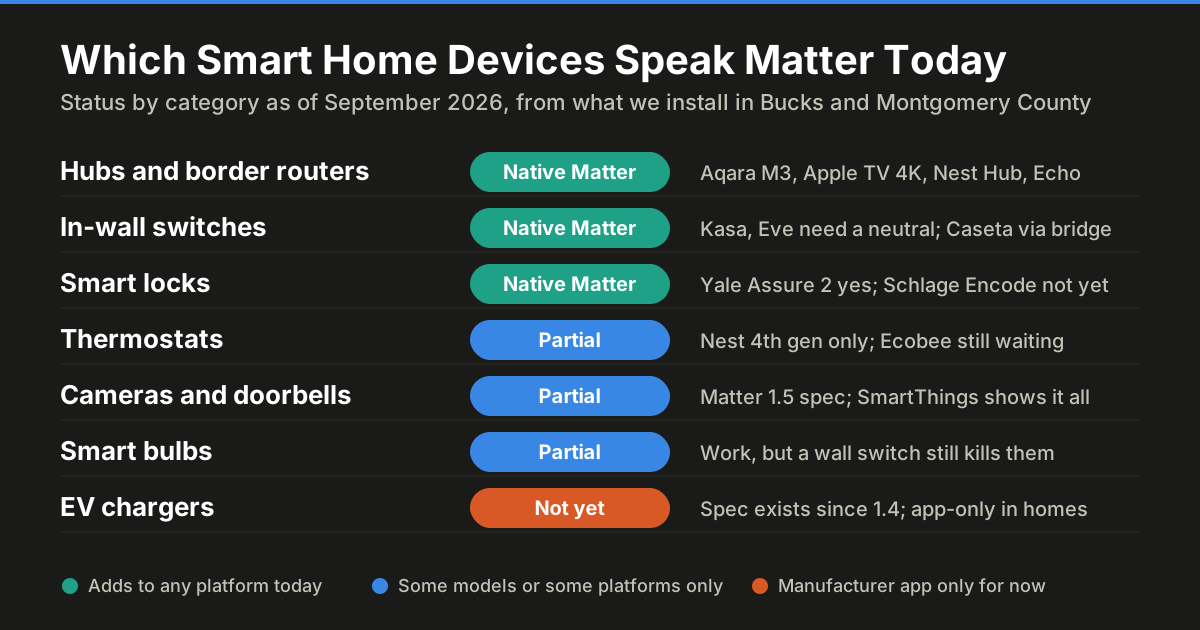
You need at least one Thread border router, ideally two on opposite ends of the house, and which one depends on the phones you carry, as we laid out in our smart home setup guide. For Apple households it is still the Apple TV 4K with Ethernet, the only model with the Thread radio; Apple raised it to $249 in June 2026 and the HomePod mini went from $99 to $129 at the same time. New models are rumored for this fall, so if you can wait a few weeks, wait. Google households get the Nest Hub (2nd gen) at $99.99. Alexa households get the Echo (4th gen) at $99.99 or the Echo Hub wall panel at $179.99, both with Zigbee and Thread inside.
For a mixed household we like the Aqara Hub M3: Matter controller, Thread border router, and Zigbee bridge in one PoE-powered unit at about $119 to $130 as of September 2026. The Aeotec Smart Home Hub 2 at $120 is the SmartThings equivalent. Both let older Zigbee sensors appear as Matter devices to Apple or Google, and the M3 has become our default for clients who want the whole house in one app.
Switches and Dimmers, and the Neutral Wire Question
We install switches, not bulbs, for anything on a wall switch. A smart bulb dies the moment somebody flips the switch off; a smart switch works like a normal switch for guests and kids and still answers to the app. The catch is electrical: nearly every Matter-certified in-wall switch we can find, including TP-Link’s Kasa KS225 and KS240 (roughly $25 to $45 each) and the Eve Light Switch, requires a neutral wire in the box, and a lot of Bucks County housing built before the mid-1980s has switch loops with no neutral. Pull a cover plate and look for a bundle of white wires capped together in the back of the box before you order a ten-pack.
For no-neutral boxes, and frankly for most of our installs, we use Lutron Caseta. The Diva smart dimmer runs about $70 per switch and the starter kit with the bridge is around $125 as of this month. Caseta switches use Lutron’s own Clear Connect radio rather than Thread, and the Caseta bridge presents them to Apple, Google, Alexa, and SmartThings, including through Matter since Lutron’s 2024 firmware update. The most reliable dimmers we have ever installed show up in every app you care about.
Thermostats: The Matter Gap Nobody Mentions on the Box
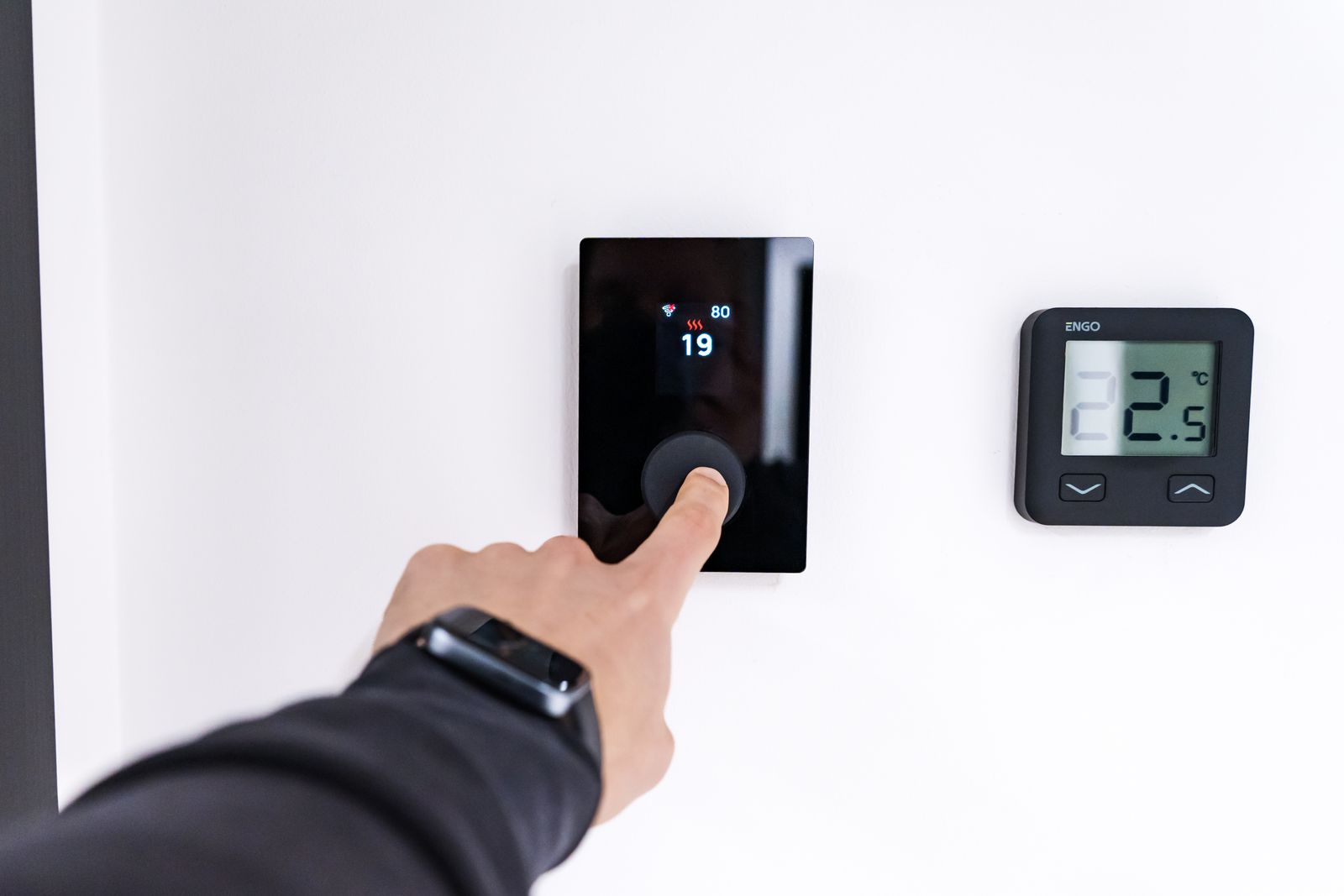
The Google Nest Learning Thermostat (4th gen), listed at $279.99 and regularly on sale near $219, is the only mainstream thermostat we know of that is Matter and Thread certified out of the box, which means it works natively in Apple Home for the first time in Nest’s history. The Ecobee Smart Thermostat Premium, $329 list and typically $230 to $285 on the street, is the better thermostat in several ways, with a built-in air quality sensor and up to 20 room sensors at about $40 each. But it does not support Matter as of September 2026; its separate per-platform integrations work fine today and simply are not future-proof.
Either way, the wiring matters more than the brand. Both want a C-wire for constant 24-volt power, and older furnaces around here frequently do not have one at the thermostat. Ecobee ships a power extender kit that usually solves it; Nest sometimes runs without one and sometimes cannot. If your current thermostat runs on batteries, budget for a C-wire pull. If your house has electric baseboard heat, you need a line-voltage smart thermostat, and that is an electrician’s install.
Locks and Doorbells
The Yale Assure Lock 2 Plus is the lock we point people to when interoperability is the priority. The base Wi-Fi model sells around $199 as of this month, and Yale’s modular design makes the radio a $40 to $80 swap: Wi-Fi, Z-Wave, Zigbee, or Matter over Thread. The Schlage Encode Plus, at $289, is the sturdier lock with an ANSI Grade 1 rating and Apple Home Key tap-to-unlock, but it still has no Matter or Thread radio. We install both and tell iPhone-only households to weigh the Schlage’s build against the Yale’s flexibility.
Doorbells are a wiring question first. A wired video doorbell beats a battery one for reliability, but the transformer in older homes is often 8 or 10 volts and modern doorbells want 16 to 24 volts; swapping it is a quick job for us and a common surprise for homeowners. Pair the doorbell with the same platform as your cameras, because doorbell video is still where Matter support is real on paper and thin in practice.
Cameras: Matter Finally Covers Them, Sort Of
Matter 1.5 was supposed to be the moment you could put any camera in any app. What actually happened is that a handful of cameras shipped with it, and only SmartThings shows the full feature set so far. The Aqara Camera Hub G5 Pro is the one we would buy for a mixed-platform home: 4MP, a built-in spotlight, a Thread border router and Zigbee hub inside the camera, and Apple HomeKit Secure Video, at $159 to $189 for the PoE model as of September 2026. A camera that doubles as your second border router is a smart way to spend the money.
For more than three cameras we install UniFi Protect, the platform from our pro network closet post. It records locally with no subscription, runs on PoE so every camera is one cable, and reaches Apple Home through HomeKit. It is not a Matter product, and that is fine: video is the one place where a purpose-built system beats a universal one.
EV Chargers: Smart, But Not Matter Yet
Matter 1.4 defined an EV charger device type back in 2024, and every manufacturer says Matter is coming. As of September 2026 we have not installed a residential charger that shows up as a Matter device in a homeowner’s app, so treat charger “smart” features as app features for now. That matters less than it sounds, because the integration that saves money is with your utility and your solar, not your light switches. The ChargePoint Home Flex (50A, $699) and Wallbox Pulsar Plus (48A, $649) both support scheduling and utility demand-response programs, and Wallbox talks to Enphase solar directly. The Emporia Level 2 (48A, about $449) is the value pick and pairs with Emporia’s whole-panel energy monitor, the most useful device here for anyone watching a rising PECO bill.
Every one of these is a 240-volt, 40- to 60-amp circuit and a permit in Bucks and Montgomery County. We covered why 48A is the sweet spot in Level 2 vs Level 3 chargers; the charger’s app matters far less than whether your panel has the capacity for it.
What We Install Most in Bucks and Montgomery County
Asked to spec a “works together” package for a typical 1970s to 2000s colonial in Doylestown, Warminster, or Horsham this month, we would quote an Aqara Hub M3 or Apple TV 4K as the border router, Lutron Caseta Diva dimmers on the main living areas and exterior lights, a Nest 4th gen or Ecobee Premium depending on whether Matter or room sensors matter more, a Yale Assure Lock 2 Plus on the door they actually use, and a G5 Pro or a small UniFi Protect system depending on camera count. Add a whole-home surge protector at the panel, because every device on this list is a small computer and PECO’s summer surges do not care what it cost.
Installed, a package like that runs $1,800 to $3,500 depending on switch count and whether a C-wire needs pulling, and the electrical portion is about a day. The thing we insist on first is the network: a single ISP router in a corner cannot hold 40 devices, and a Thread mesh needs a second border router on the far side of the house. Most of our smart home service calls are Wi-Fi problems wearing a smart home costume.
Where to Go From Here
The platforms will catch up to Matter 1.5 and 1.6 over the next year, Apple’s fall hardware is weeks away, and Schlage and Ecobee both have Matter on their public roadmaps. Buy the hub and the switches now, because those are wiring decisions and they age well. Hold on cameras and anything Apple until the fall announcements land.
Before you buy a single switch, pull one cover plate, look for that bundle of white wires, and call us if it is not there. We would rather do a 20-minute survey than a return-shipment rescue.
Sponsored
Need a Licensed Electrician?
Serving Bucks & Montgomery County. Free estimates on all projects.
Get Your Free EstimateNeed Help With This?
Graff's Electric & IT Solutions is here to help with all your electrical and technology needs in Bucks & Montgomery County.