 Electrical
Table of Contents
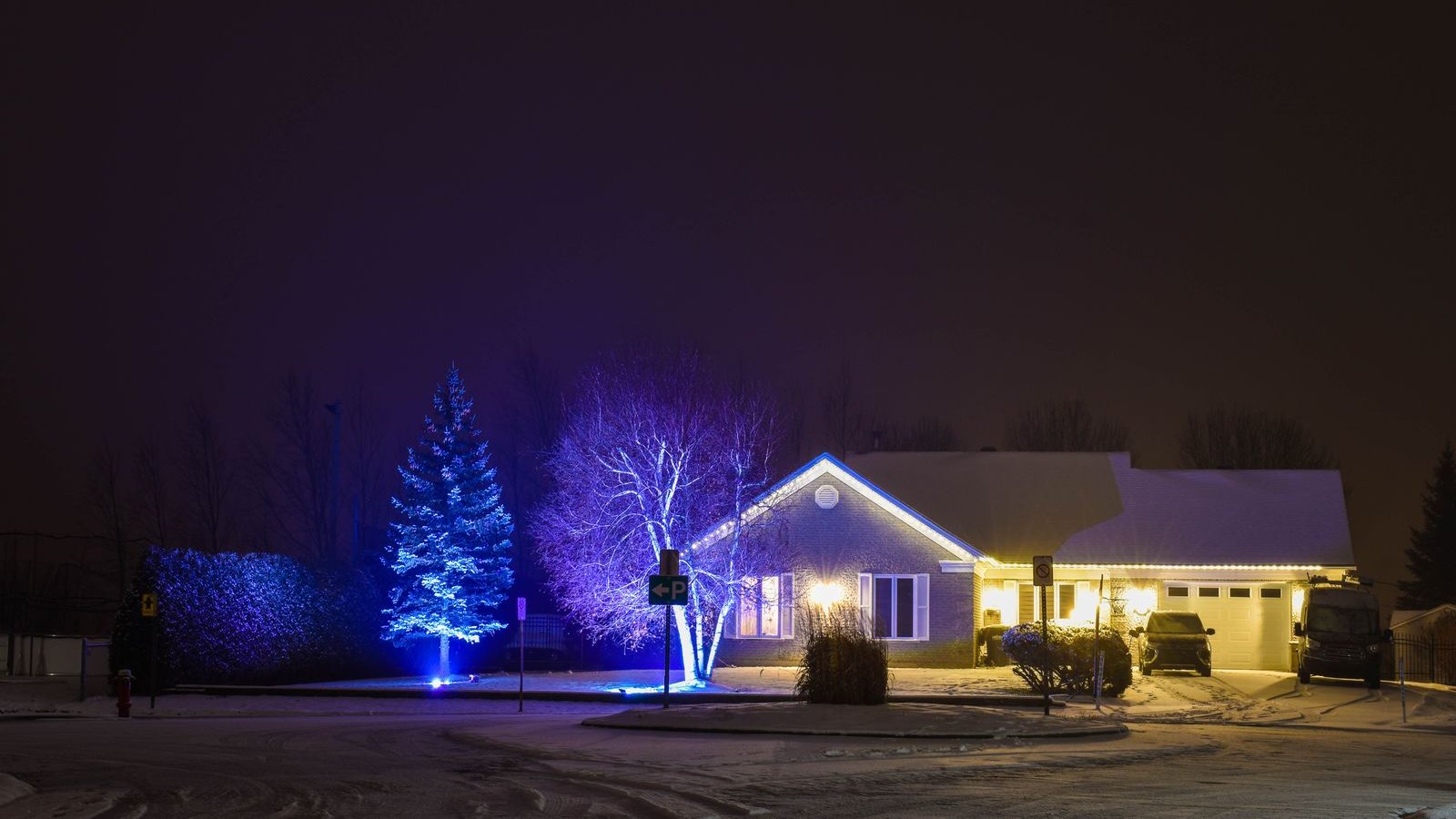
The Halloween decorations are still up and the ladders for the Christmas lights are already coming out. In a few weeks the most common electrical complaint in Bucks County will be some version of this: the lights worked fine for two nights, then it rained, and now the outdoor outlet keeps tripping. Or it trips every evening when the timer kicks on. Or the outlet is just dead and nobody can find a button to push.
Almost all of this comes back to one device, the GFCI, doing exactly what it was built to do. Once you understand what it is reacting to, finding the problem is usually a 20-minute job.
What a GFCI Is Actually Watching
A GFCI (ground-fault circuit interrupter) compares the current going out on the hot wire with the current coming back on the neutral. If everything is healthy, they match. If some of that current is leaking somewhere else, through water, through a cracked cord, or through a person, the two numbers no longer match and the GFCI shuts the power off in a fraction of a second.
The threshold is tiny. A standard residential GFCI is built to trip when the difference reaches about 5 milliamps, a few thousandths of an amp. That is far below what it takes to trip a breaker, and it is low enough to stop a shock before it can stop your heart. That is why the code requires GFCI protection on outdoor outlets at houses, along with bathrooms, garages, kitchens, and basements. Our GFCI explainer covers where else you need them.
The part that matters for holiday lights: that 5 milliamp budget is shared by everything plugged in downstream. Every light string, extension cord, timer, and inflatable leaks a tiny bit. Individually each one is fine. Add enough of them, add some moisture, and together they cross the line.
The Usual Suspects, in Order
1. Water in a connection
This is the number one cause by a mile. The plug-to-plug connection between two cords lying in the grass or the mulch fills with rain, dew, or melting snow, and the GFCI sees leakage through the water. If your trips line up with rain, frost, or the sprinklers, start here.
Fix: Get every connection off the ground. Use stake-mounted or hanging connection covers made for outdoor cords, or at minimum a sealed outdoor connection box. Point plugs downward so water drips off instead of running in.
2. Old, worn, or indoor-only light strings
Insulation cracks with age and UV, sockets corrode, and the cheap indoor string someone hung on the porch rail was never rated to get wet. One bad string can account for most of the leakage on the whole circuit.
Fix: Check the tag on every string and cord. It should say it is suitable for outdoor use. Throw out anything with cracked insulation, missing bulbs, or green corrosion in the sockets. Replacing old incandescent strings with outdoor-rated LED sets also cuts the load dramatically.
3. Too much on one outlet
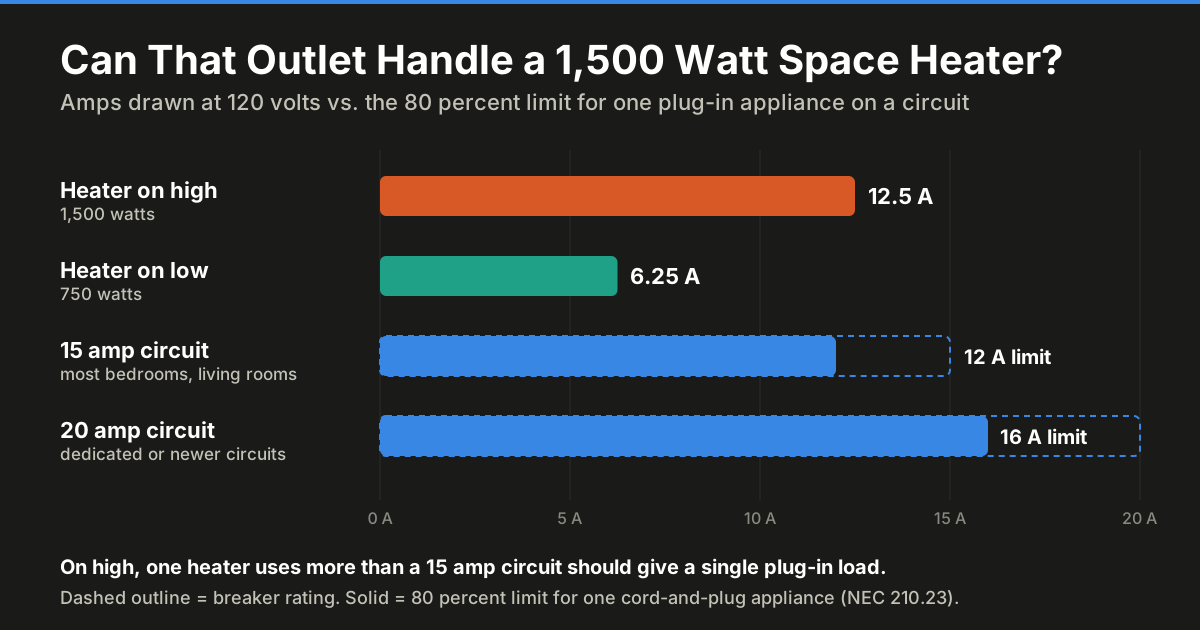
Every string has a tag that tells you the maximum number of sets, or the maximum wattage, you can connect end to end. Go past it and you are overloading the string’s own wiring. Separately, the whole display is sharing one circuit, usually 15 or 20 amps, that may also feed the garage or the porch light. When lights run for hours at a time, it is good practice to stay at or below 80 percent of the circuit rating.
Fix: Follow the tag, and split big displays across more than one outlet on more than one circuit. If you are running out of outdoor outlets, that is worth fixing permanently (more on that below).
4. Inflatables, blow-molds, and anything with a motor
Inflatable blowers and older motorized decorations leak more than LED strings and are often the piece that tips the total over the edge, especially once they have been rained on.
Fix: Put motorized pieces on their own outlet if you can, and keep their plugs off the ground like everything else.
5. The outlet itself
A GFCI receptacle is an electronic device and it wears out. Outdoor ones live a hard life. If it trips with nothing plugged into it, or will not reset at all, the problem is the device or the wiring, not your decorations. Water inside the box, a missing or broken cover, or a fault in the wiring behind it will all do this.
How to Find the One That Is Tripping It
This works most of the time and needs no tools:
- Unplug everything from the outlet and reset the GFCI. If it will not hold with nothing connected, skip to the next section. That is an outlet or wiring problem.
- Plug in one run at a time. Add one string or one extension cord run, wait a few minutes, then add the next.
- When it trips, the last thing you added is your suspect. Unplug it, reset, and keep going with the rest to make sure there is only one.
- If it only trips when wet, wait for the next damp evening and repeat, or look hard at every connection on the ground.
- Inspect the suspect for a wet connection, cracked insulation, or corrosion. Replace it rather than taping it.
”My Outdoor Outlet Is Dead and Has No Reset Button”
Very common, and usually not a dead outlet. In a lot of houses, one GFCI receptacle protects several other outlets downstream of it. The outdoor outlet with no buttons may be fed through a GFCI in the garage, a bathroom, the basement, or even another outdoor outlet on the other side of the house. When that one trips, everything after it goes dark.
Check every GFCI in the garage, basement, bathrooms, and outside, and look at the panel for a GFCI breaker (it has its own test button). Push reset on anything that has one. Nine times out of ten the outlet comes back. If you find it, put a small label on the dead outlet so you remember next year.
What You Should Never Do
- Do not replace the GFCI with a regular outlet to make the tripping stop. That removes the one thing standing between a wet extension cord and the person who picks it up.
- Do not use adapters or cords that bypass the ground pin, and do not tape over a reset button.
- Do not run cords through windows or doors where they get pinched, or staple through them.
- Do not keep resetting a GFCI that trips with nothing plugged in. It is telling you something is wrong in the box or the wiring.
Our posts on holiday lighting safety and avoiding holiday electrical fires cover the indoor side: trees, cords under rugs, and overloaded power strips.
What Code Wants on an Outdoor Outlet
Pennsylvania enforces the 2017 National Electrical Code. For a typical outdoor outlet at a house, that means:
- GFCI protection for outdoor 15 and 20 amp, 125 volt receptacles.
- Weather-resistant (WR) receptacles in damp and wet locations. They are built to handle moisture and UV better than a standard device.
- An in-use cover (the deep “bubble” cover) on outlets in wet locations, so the outlet stays protected while something is plugged in. A flat flip cover that only closes when nothing is plugged in is not enough for a spot where lights stay plugged in all season.
A lot of older houses have none of the three. Upgrading an outdoor outlet to a WR GFCI with an in-use cover is quick work, and it fixes a big share of the “trips every time it rains” calls on its own.
Thinking About Next Year (or Permanent Lights)
If you fight the same extension cords every December, the real fix is power where the decorations are. The things we install most:
- An outlet under the eaves for roofline lights, ideally on a switch or a smart switch inside so you are not on a ladder to turn them on.
- A dedicated outdoor circuit for a big display, so the lights are not sharing with the garage door opener and the freezer.
- A properly mounted, GFCI-protected outlet at the front walk or landscape beds, so cords are not snaking across the yard.
Those same outlets power permanent track-style lighting, landscape lighting, and security cameras the rest of the year. Our outdoor lighting ideas post covers what else they can run.
The Short Version
- A GFCI trips at about 5 milliamps of leakage, and every string and cord on it adds to that total.
- Water in a connection on the ground is the most common cause. Get connections up and covered.
- Find the culprit by plugging things back in one run at a time.
- A dead outdoor outlet is often fed by a tripped GFCI somewhere else. Check the garage, bathrooms, basement, and panel.
- If it trips with nothing plugged in, the outlet or the wiring needs attention.
If your outdoor outlets will not hold, you are out of places to plug in, or you want an outlet up at the roofline before the lights go up, get in touch with Graff’s Electric. We do GFCI outlet work across Bucks and Montgomery County, and early November is the best time to get it done before the ladders come out.
Sponsored
Need a Licensed Electrician?
Serving Bucks & Montgomery County. Free estimates on all projects.
Get Your Free EstimateNeed Help With This?
Graff's Electric & IT Solutions is here to help with all your electrical and technology needs in Bucks & Montgomery County.