 Electrical
 Table of Contents
Ever wonder if your electrical panel can actually handle everything plugged into your home? Between the central air, electric dryer, water heater, EV charger, and whatever else you’ve added over the years, your panel might be working harder than you think.
That’s why we built a free residential load calculator based on the National Electrical Code (NEC) Article 220 - the same standard licensed electricians use when sizing panels and planning service upgrades.
Why Your Panel Load Matters
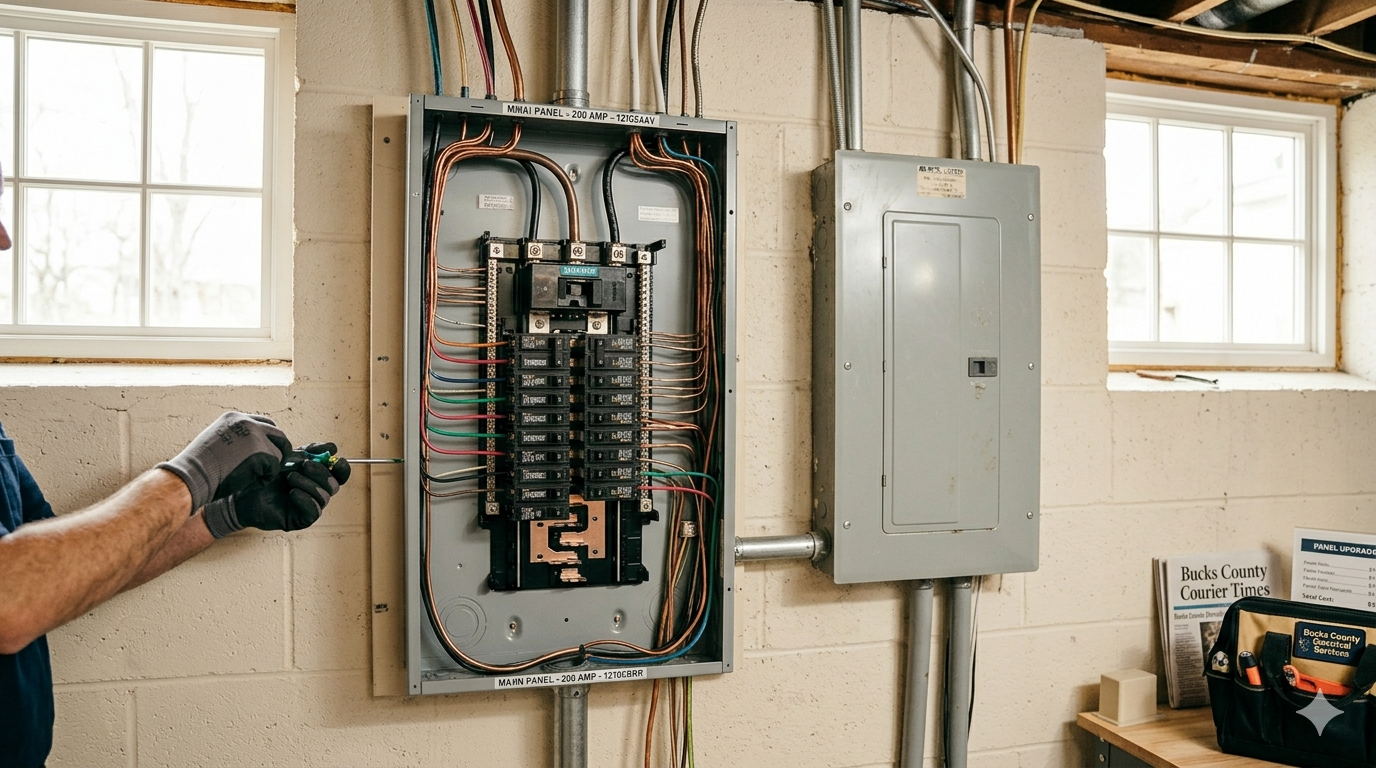
Your electrical panel has a maximum amperage rating - most homes in Bucks County and Montgomery County have either a 100-amp or 200-amp panel. Every appliance, circuit, and device draws from that capacity.
When the total demand approaches or exceeds your panel’s rating, you run into real problems:
- Breakers tripping frequently when you run multiple appliances at once
- Dimming or flickering lights when the A/C kicks on
- Inability to add new circuits for an EV charger, hot tub, or home addition
- Safety risks including overheated wiring and potential fire hazards
A load calculation tells you exactly where you stand - and whether your panel has room for that new appliance you’re planning to add.
How Our Calculator Works
Our tool follows the NEC Article 220 Standard Calculation Method (Part III), which is the same method electricians use for residential service calculations. Here’s what it accounts for:
General Lighting & Receptacle Load
The NEC assigns 3 VA per square foot of living space (NEC 220.12). This covers general lighting and all the outlets throughout your home. A 2,000-square-foot home starts at 6,000 VA just for lighting and receptacles.
Small Appliance & Laundry Circuits
Every home is required to have at least two small appliance circuits (kitchen, dining area) and one laundry circuit, each rated at 1,500 VA (NEC 220.52). That’s 4,500 VA minimum before you count a single large appliance.
Demand Factors
Here’s where the NEC gets practical. Not everything runs at full power simultaneously, so the code applies demand factors that reduce the calculated load:
- General loads: First 3,000 VA at 100%, everything after at 35% (Table 220.42)
- Fixed appliances (dishwasher, disposal, microwave, washer): 75% if you have four or more (NEC 220.53)
- Electric dryer: 5,000 VA or nameplate, whichever is larger (NEC 220.54)
- Electric range: Table 220.55 - typically 8,000 VA demand for a standard range
- HVAC: Only the largest of heating or cooling counts, not both (NEC 220.60)
- EV charger: 100% of nameplate rating (NEC 625.41)
The Result
The calculator adds everything up, applies the demand factors, and converts the total VA to amps at your service voltage (typically 240V). You’ll see:
- Total calculated load in amps
- A capacity bar showing what percentage of your panel is being used
- A clear pass, warning, or fail status
- A full breakdown of every load with NEC references
You can even print the report to bring to your electrician for a professional assessment.
When to Run a Load Calculation
A load calculation is especially useful when you’re planning to add:
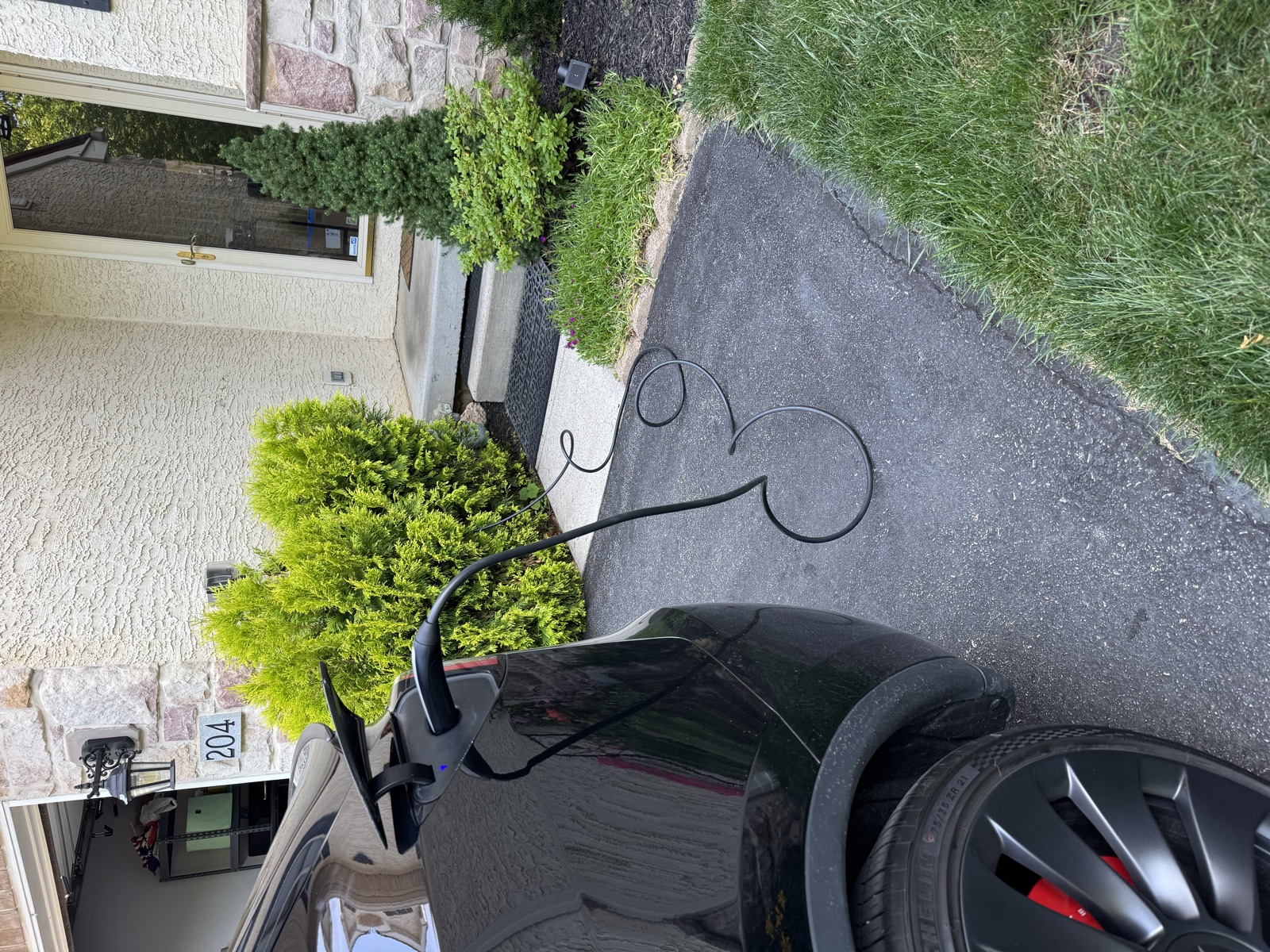
- An EV charger - Level 2 chargers draw 32-48 amps on a dedicated 240V circuit
- A hot tub or pool pump - these are large, continuous loads that many panels weren’t designed for
- Central air conditioning - especially if you’re upgrading from window units
- Electric heat or a heat pump - a major load that changes the equation significantly
- A home addition or finished basement - more square footage means more lighting and outlet circuits
- A kitchen renovation - modern kitchens have more dedicated circuits than older ones
If the calculator shows you’re at 80% or above, it’s time to talk to a licensed electrician about a panel upgrade before adding anything new.
100-Amp vs. 200-Amp: Which Do You Need?
Many older homes in Warminster, Doylestown, Horsham, and throughout Bucks County still have 100-amp panels. These were adequate decades ago, but modern homes with electric appliances, A/C, and especially EV chargers often need 200 amps to operate safely.
Run the calculator with your current panel size to see where you stand. If it shows a fail or warning, upgrading to a 200-amp service is usually the right move - and it increases your home’s value at the same time.
Try It Now
Our load calculator is completely free and works on any device - phone, tablet, or desktop. No sign-up required.
If the results show you need a panel upgrade or you have questions about your home’s electrical capacity, give us a call at (215) 974-0720. We serve Warminster, Doylestown, Newtown, Horsham, Lansdale, Blue Bell, and all of Bucks and Montgomery County.
Graff’s Electric & IT Solutions is a PA licensed and insured electrical contractor serving residential and commercial customers across Bucks County, Montgomery County, and the greater Philadelphia area.
Sponsored
Need a Licensed Electrician?
Serving Bucks & Montgomery County. Free estimates on all projects.
Get Your Free EstimateNeed Help With This?
Graff's Electric & IT Solutions is here to help with all your electrical and technology needs in Bucks & Montgomery County.