Table of Contents
When the power goes out in Bucks County or Montgomery County, the first thing most homeowners think about is how long it’s going to last. The second thing they think about is whether they should finally get a generator. And the question that follows right after: what size generator do I need for my house?
It’s a fair question - and the answer isn’t one-size-fits-all. The right generator for your home depends on what you want to keep running, how your electrical system is set up, and whether you’re looking for bare-minimum backup or whole-house coverage.
Here’s how to figure it out.
Start With Your Power Needs
Before you look at any generator specs, you need to understand how much electricity your home actually uses - or more specifically, how much you’d need during an outage.
Every appliance and system in your home draws a certain number of watts. Some draw a steady amount (called running watts), and some need a bigger burst of power to start up (called starting watts or surge watts). Both matter when sizing a generator.
Here are some common household loads to give you a ballpark:
- Refrigerator: 150–400 running watts, up to 1,200 starting watts
- Sump pump (1/3 HP): 800 running watts, up to 1,300 starting watts
- Central air conditioning (3-ton): 3,500 running watts, up to 4,500 starting watts
- Gas furnace blower: 500–700 running watts
- Well pump (1/2 HP): 1,000 running watts, up to 2,100 starting watts
- Electric water heater: 4,000–4,500 running watts
- Lights (10 LED bulbs): 100 running watts
- Wi-Fi router and modem: 20–30 running watts
- Microwave: 1,000–1,500 running watts
- Washing machine: 500 running watts, up to 1,400 starting watts
The basic method: add up the running watts of everything you want to keep powered, then account for the highest starting watt load that could kick on at the same time. That total gives you the minimum generator size you need.
Common Generator Sizes and What They Can Power
Generators are rated in kilowatts (kW). Here’s a practical breakdown of the most common residential sizes and what you can realistically expect from each.
7.5 kW - The Essentials
A 7,500-watt generator is a solid entry-level option for homeowners who just want to keep the basics running during an outage. Think of it as your emergency survival kit.
What it can typically power:
- Refrigerator and freezer
- Sump pump
- Some lights throughout the house
- Wi-Fi and a few electronics
- Gas furnace blower (for heating)
What it can’t handle: Central air conditioning, electric water heaters, electric stoves, or multiple large appliances running at the same time. If you have a well pump, it may eat up most of your available capacity on its own.
This size works well for smaller homes or for homeowners who are okay being selective about what stays on.
14 kW - The Sweet Spot
A 14-kilowatt generator is the most popular choice for average-sized homes in our area. It gives you enough headroom to run most of the things that matter without powering absolutely everything.
What it can typically power:
- Everything in the essentials list above
- Central air conditioning (one unit)
- Well pump
- Kitchen appliances (microwave, dishwasher)
- Multiple rooms of lights and outlets
This is the size we install most often for homeowners in Bucks County and Montgomery County. It covers the things that make a power outage feel like a minor inconvenience instead of a crisis - you keep your heating and cooling, your kitchen works, and your sump pump stays on during storms.
22 kW and Above - Whole-House Power
If you want your home to function like the power never went out, a 22 kW or larger standby generator is the way to go. These units can handle your entire electrical panel, including high-draw items like electric water heaters, electric dryers, and even electric vehicle chargers.
What it can typically power:
- Your entire home, simultaneously
- Multiple HVAC zones
- Electric water heater
- All kitchen appliances including electric range
- Home office equipment, security systems, everything
For larger homes - especially some of the bigger properties throughout Bucks County and Montgomery County - a 24 kW or even 30+ kW unit may be necessary if the home has multiple HVAC systems, a pool, or other heavy electrical loads.
Portable vs. Standby: Which Type Makes Sense?
There are two main categories of home generators, and they’re very different animals.
Portable generators (typically 3–12 kW) run on gasoline, cost less upfront, and require you to set them up manually when the power goes out. You run extension cords from the generator to whatever you want to power. They work in a pinch, but they’re not a permanent solution - and they come with carbon monoxide risks if not used properly outdoors.
Standby generators (typically 7.5–30+ kW) are permanently installed outside your home, connected to your electrical panel through a transfer switch, and run on natural gas or propane. When the power goes out, they kick on automatically - often within 10 to 30 seconds. No setup, no extension cords, no hauling gasoline.
For most homeowners looking for reliable backup power, a standby generator is the better long-term investment. It protects your home even when you’re not there, which matters for things like sump pumps, freezers full of food, and pipes that could freeze in winter.
The Transfer Switch: Why It Matters
A transfer switch is the piece of equipment that sits between your generator and your electrical panel. It’s what allows the generator to safely feed power into your home’s wiring without backfeeding into the utility grid - which is both illegal and extremely dangerous to utility workers.
There are two types:
- Manual transfer switch: You physically flip the switch to move your home from utility power to generator power. More affordable, but requires you to be home.
- Automatic transfer switch (ATS): Detects when utility power is lost and automatically switches to generator power. When the grid comes back, it switches back and shuts down the generator. This is what comes standard with most standby generators.
In Pennsylvania, a transfer switch is required by the National Electrical Code for any generator that’s connected to your home’s electrical system. This isn’t optional - it’s a code and safety requirement.
Why Professional Installation Matters
Generator installation is not a weekend DIY project. Here’s what’s actually involved:
- Load calculation to properly size the unit for your home’s specific needs
- Concrete pad or gravel base to support the generator
- Gas line installation or extension (requires a licensed plumber or qualified contractor)
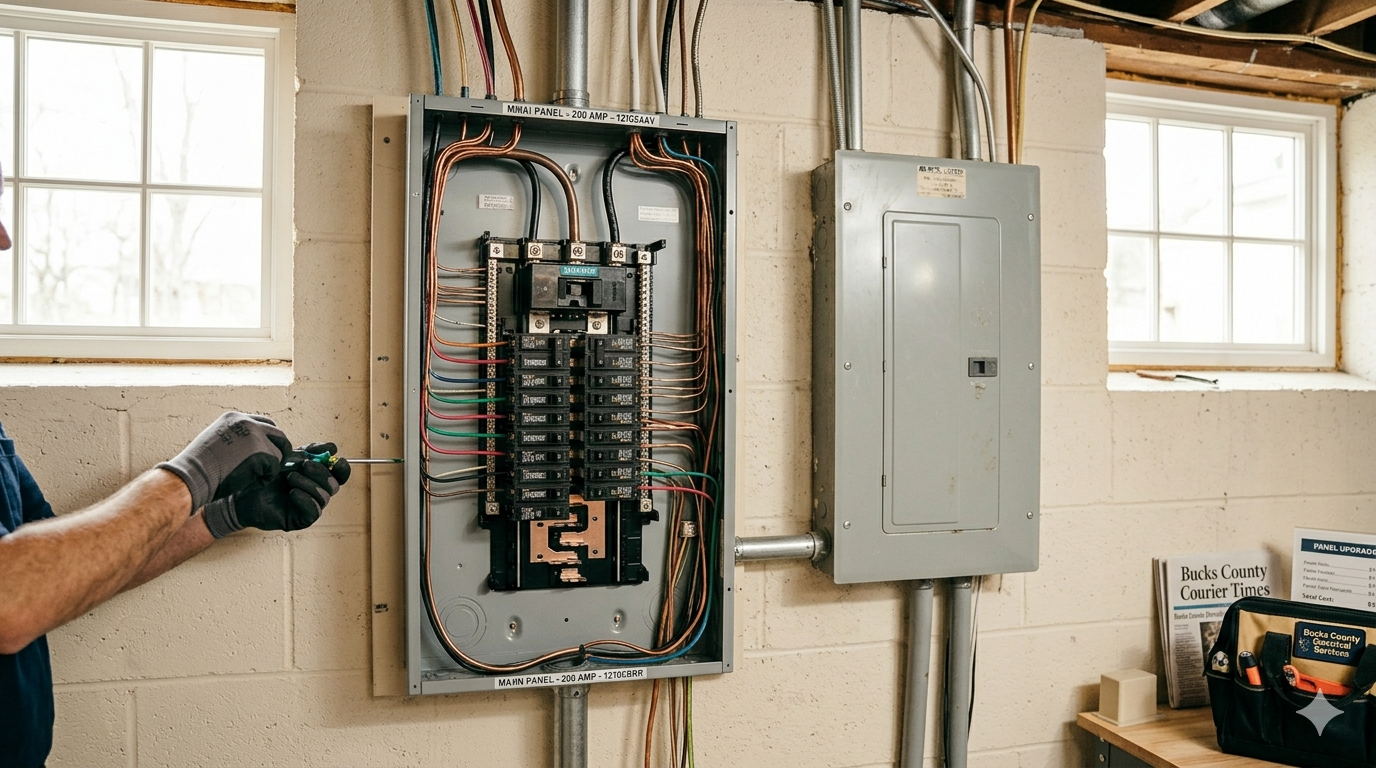
- Electrical connections to your main panel through a transfer switch
- Compliance with local codes - setback distances from windows, property lines, and HVAC equipment
- Permit and inspection from your local municipality
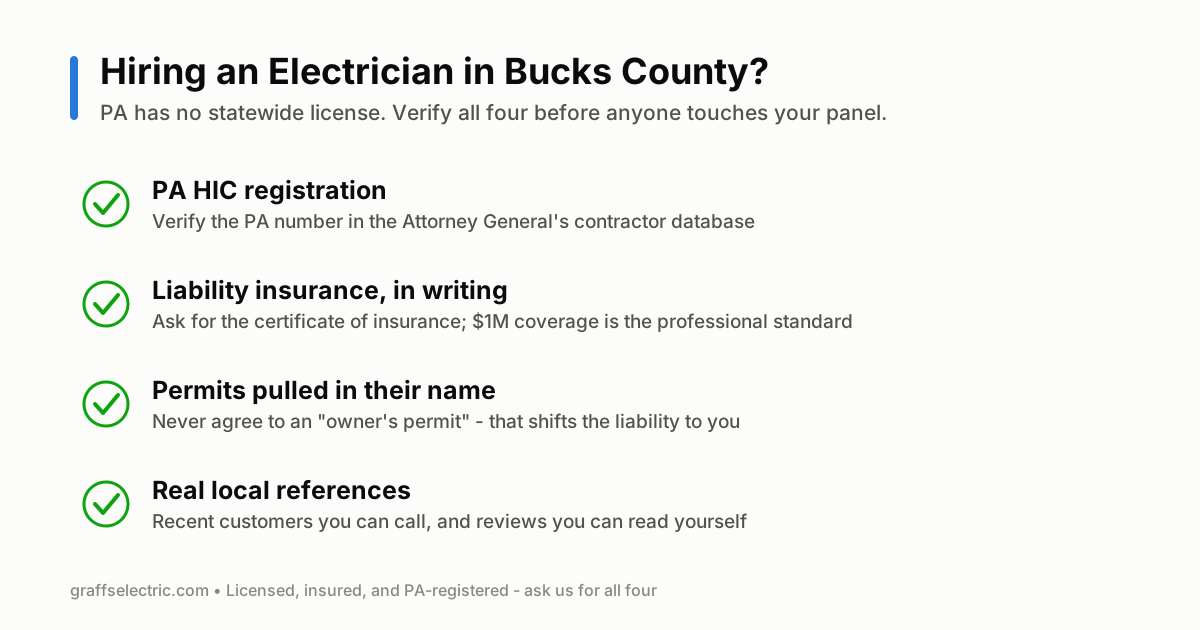
In Bucks County and Montgomery County, generator installations require electrical permits and inspections. A licensed electrician makes sure everything is sized correctly, wired safely, and passes inspection the first time. We’ve seen homeowners spend thousands on a generator only to have it installed incorrectly - undersized wiring, missing disconnects, improper grounding. Those mistakes are expensive to fix and dangerous to live with.
Professional installation also protects your manufacturer’s warranty. Most major generator brands (Generac, Kohler, Briggs & Stratton) require installation by a qualified technician for the warranty to be valid.
How to Get Started
If you’re thinking about a generator for your home, here’s the simplest path forward:
- Make a list of everything you’d want to keep running during an outage
- Decide your priority level - essentials only, most of the house, or everything
- Call a licensed electrician to do a proper load calculation and recommend the right size
We handle generator installations throughout Bucks County and Montgomery County - from sizing and selection all the way through permitting, installation, and final inspection. Whether you’re looking at a 14 kW unit for everyday peace of mind or a whole-house system for a larger property, we’ll make sure it’s done right.
The Bottom Line
The answer to “what size generator do I need” comes down to what you want to keep running and how much you’re willing to invest. A 7.5 kW unit covers the basics. A 14 kW unit handles most homes comfortably. And a 22 kW or larger unit gives you full whole-house backup.
Whatever size you choose, the most important thing is that it’s properly sized, professionally installed, and connected through a code-compliant transfer switch. That’s what turns a generator from a piece of equipment in your yard into real protection for your home and family.
If you’re in Bucks County or Montgomery County and want to talk through your options, give Graff’s Electric a call. We’ll walk you through the sizing, recommend the right unit, and handle the full installation - no guesswork involved.
Sponsored
Need a Licensed Electrician?
Serving Bucks & Montgomery County. Free estimates on all projects.
Get Your Free EstimateNeed Help With This?
Graff's Electric & IT Solutions is here to help with all your electrical and technology needs in Bucks & Montgomery County.