 EV Charging
 Table of Contents
Congratulations on going electric. Whether you just picked up a new EV or you are planning ahead for one arriving in your driveway next month, there is a question every new electric vehicle owner faces almost immediately: what kind of home charger do I actually need? The answer depends on how much you drive, what your home’s electrical system can support, and how much convenience you want built into the process. Choosing an EV charger is not complicated, but there are real differences between your options that will affect how you live with the car every single day. This guide walks you through everything you need to make a smart decision before you call an electrician.
Level 1 vs. Level 2: The Foundational Choice
Every EV charging conversation starts here, because this is the decision that shapes everything else.
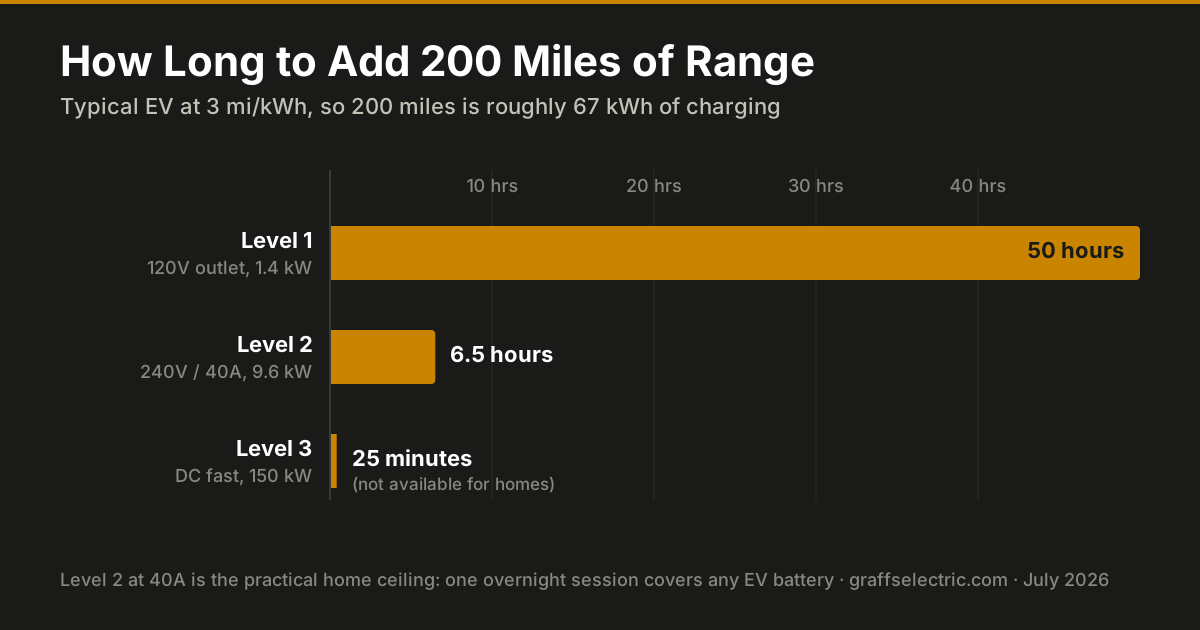
Level 1 charging uses a standard 120-volt outlet - the same kind you plug a lamp into. Every electric vehicle comes with a Level 1 charging cord in the box. You plug it into a regular outlet in your garage or near your driveway, and it begins adding range to your battery overnight. The problem is the speed: Level 1 charging typically delivers 3 to 5 miles of range per hour. If you drive 40 miles a day, you need roughly 8 to 12 hours plugged in just to recover what you used. That works for some drivers with short commutes and predictable schedules. For most people, it is too slow to keep up with real driving habits.
Level 2 charging runs on 240 volts - the same voltage as your dryer or electric range. A Level 2 home charger, also called an EVSE (Electric Vehicle Supply Equipment), delivers 15 to 30 miles of range per hour depending on the amperage. A full charge on most EVs takes 4 to 8 hours with Level 2. That means you plug in when you get home from work and wake up to a full battery. This is the standard for home charging, and it is what the vast majority of EV owners in Bucks County and Montgomery County install.
Unless your daily driving is genuinely minimal - think under 25 miles per day - Level 2 is the right choice for home charging. The cost difference versus Level 1 is mostly in the installation, not the charger itself.
Amperage: Sizing Your Charger Correctly
Within the Level 2 category, chargers come in different amperage ratings, and this is where choosing an EV charger gets a little more specific.
Home Level 2 chargers most commonly run on 16, 24, 32, 40, or 48 amps. The higher the amperage, the faster the charging rate. Here is a practical breakdown:
- 16-amp charger (3.8 kW): About 10-12 miles of range per hour. Suitable for hybrids and smaller EV batteries.
- 24-amp charger (5.8 kW): About 15-18 miles per hour. A solid middle-ground for moderate driving.
- 32-amp charger (7.7 kW): About 20-25 miles per hour. The most popular residential choice. Handles most EVs comfortably.
- 48-amp charger (11.5 kW): About 30+ miles per hour. The fastest standard residential Level 2 option. Best for large batteries (Rivian, F-150 Lightning, GMC Hummer EV) or drivers with high daily mileage.
Your vehicle’s onboard charger also sets a ceiling. If your car’s onboard charger maxes out at 7.2 kW (32 amps), installing a 48-amp charger will not make it charge faster - you will simply have headroom for a future vehicle. That said, buying a 40 or 48-amp charger now is a reasonable investment if you plan to keep the infrastructure in place long-term.
From an electrical standpoint, a 32-amp charger requires a 40-amp circuit, and a 48-amp charger requires a 60-amp circuit. Your electrician will need to assess your main electrical panel to confirm it can support the additional load. Homes in older Warminster and Doylestown neighborhoods with 100-amp panels sometimes need a panel upgrade before a high-amperage charger can be added safely.
Smart Features Worth Paying For
Basic Level 2 chargers do the job without any frills. You plug in, charging starts, and it stops when the battery is full. For many homeowners, that is plenty. But smart EV chargers add features that can meaningfully reduce your cost and improve your experience.
Scheduling: Many utilities offer time-of-use rates where electricity is cheaper overnight - often between midnight and 6 a.m. A smart charger lets you set a schedule so the car charges during off-peak hours automatically. Depending on your PECO or PPL rate plan, this can reduce your monthly charging cost noticeably.
Energy monitoring: Smart chargers track how much electricity they deliver and report it through an app. This is useful for tracking your actual charging costs and, in some cases, for reimbursement if you drive for work.
Remote control: Start or stop charging from your phone, get notifications when the charge is complete, and monitor status without going out to the garage.
Load management: Some chargers communicate with your home’s electrical system to throttle charging when other large loads are running, reducing the risk of tripping breakers during peak household use.
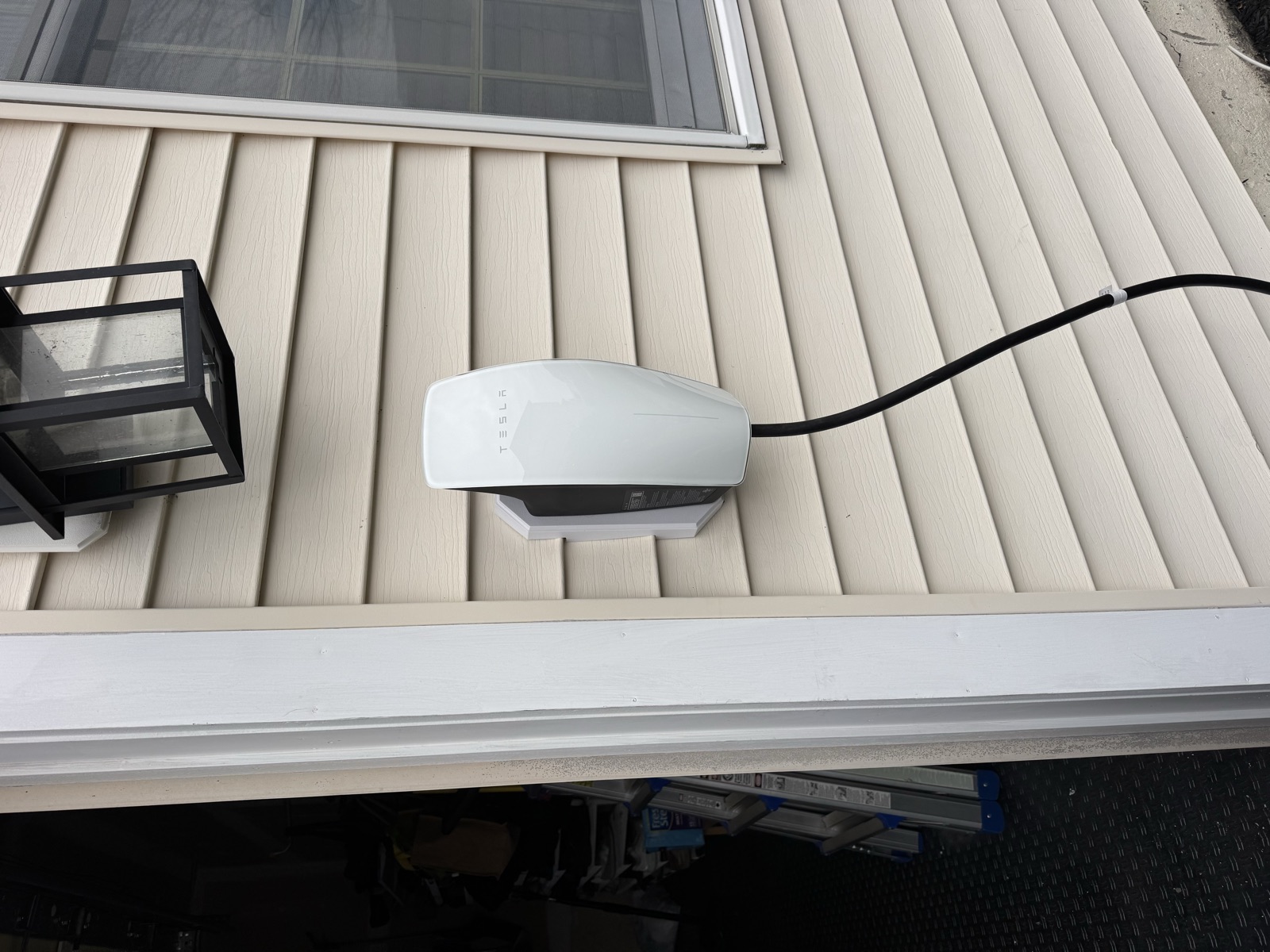
Well-regarded smart charger brands include ChargePoint, Emporia, Wallbox, Grizzl-E, and JuiceBox. Tesla owners have the option of Tesla’s wall connector, which integrates cleanly with the vehicle’s app. Most chargers today use the J1772 connector standard, which works with every non-Tesla EV. Tesla’s wall connector comes with an adapter for non-Tesla vehicles.
What Your Electrical Panel Has to Say About This
Choosing an EV charger is not only about the charger - it is also about whether your home can support it without modifications. Before any charger goes on the wall, an electrician needs to evaluate your main electrical panel.
A 200-amp panel with available breaker slots and modern wiring in good condition is the ideal starting point. Many homes in Montgomery County and Bucks County, particularly those built in the 1960s through 1980s, have 100-amp or 150-amp service. Some of these panels can support a Level 2 charger, and some cannot without upgrades. A load calculation - adding up all the existing electrical loads on the panel - will determine what is available.
If a panel upgrade is necessary, it is usually combined with the EV charger installation to keep costs manageable and avoid two separate mobilizations. Municipalities across Bucks County and Montgomery County require permits for both panel work and EV charger installation, and work must be done by a licensed electrician to pass inspection. Homes in Horsham, Hatfield, Lansdale, and Chalfont are all in jurisdictions that inspect this work, and permits protect you by ensuring the installation is done correctly.
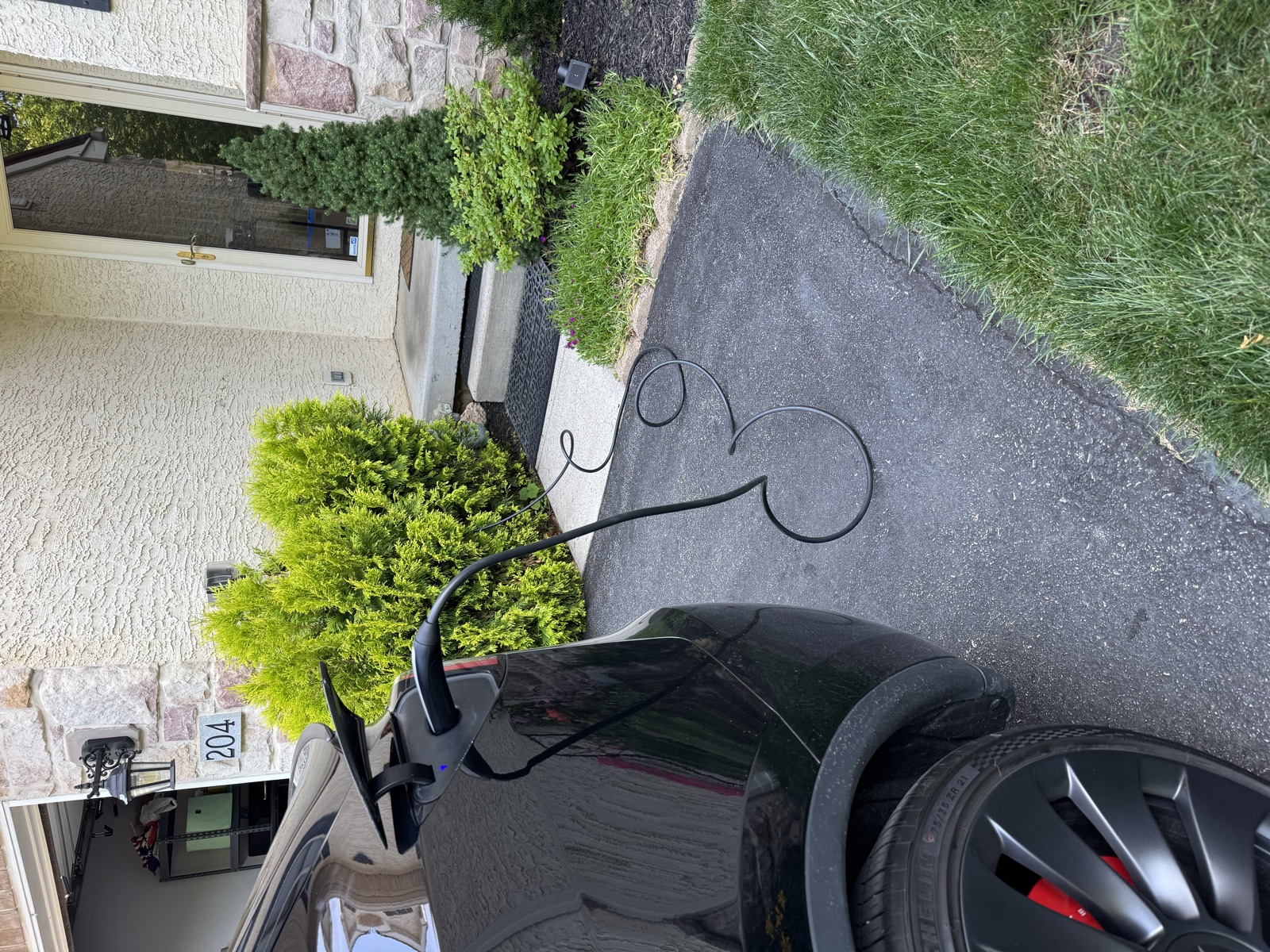
Indoor garage installation is standard, but outdoor pedestal chargers and driveway installations are also possible where garage access is limited. Weatherproof enclosures and GFCI protection are required for outdoor charger locations.
FAQ
Q: Can I install a Level 2 charger myself? A: Some manufacturers sell chargers as DIY-friendly, but the electrical work - running a new 240-volt circuit from the panel - requires permits and must be done by a licensed electrician in Pennsylvania. Unpermitted electrical work can void your homeowner’s insurance and create problems at resale. The charger itself can be fairly simple to mount once the circuit is in place, but the wiring is not a DIY project.
Q: Does my EV charger choice affect my electric bill significantly? A: The charger itself draws only what your car’s battery needs regardless of the charger’s amperage rating. A higher-amperage charger fills the battery faster but does not use more total energy - it just gets there sooner. Your total charging cost depends on how much electricity your car uses (kWh per mile) and your utility’s rate. Using a smart charger to charge during off-peak hours is the most effective way to reduce your charging costs.
Q: How long does EV charger installation take? A: For a straightforward installation with an existing 200-amp panel and a garage with room to route wire, most installations are complete in two to four hours. If conduit needs to run outdoors, the panel needs work, or the circuit run is long, the job takes longer. Your electrician will give you a clear estimate after assessing the site.
Q: Should I buy a portable Level 2 charger or have one hardwired? A: Hardwired chargers are generally more reliable and look cleaner, but plug-in Level 2 chargers (using a NEMA 14-50 outlet) offer flexibility - you can take the charger with you when you travel to a location with the right outlet. Installing a NEMA 14-50 outlet in your garage gives you the option to use either type. Many homeowners choose this approach for maximum flexibility.
Ready to get your home set up for electric driving? Call Graff’s Electric & IT Solutions at (215) 974-0720 or visit graffselectric.com to schedule your EV charger installation. We handle the full project - from panel assessment to permit and inspection - for homeowners throughout Bucks County and Montgomery County, including Warminster, Doylestown, Lansdale, Horsham, Hatfield, Chalfont, Newtown, and surrounding areas.
Sponsored
Need a Licensed Electrician?
Serving Bucks & Montgomery County. Free estimates on all projects.
Get Your Free EstimateNeed Help With This?
Graff's Electric & IT Solutions is here to help with all your electrical and technology needs in Bucks & Montgomery County.