 EV Charging
 Table of Contents
Electric vehicles are showing up in driveways all across Bucks County and Montgomery County. Whether you just bought a Tesla, a Ford F-150 Lightning, or a plug-in hybrid, the first question most new EV owners ask is simple: how do I charge at home without waiting forever?
The answer is almost always a Level 2 home charger - and getting one installed correctly by a licensed electrician makes all the difference between a seamless experience and a headache. This guide covers everything you need to know before calling an installer.
Level 1 vs. Level 2: What’s the Real Difference?
Level 1 Charging (120V Standard Outlet)
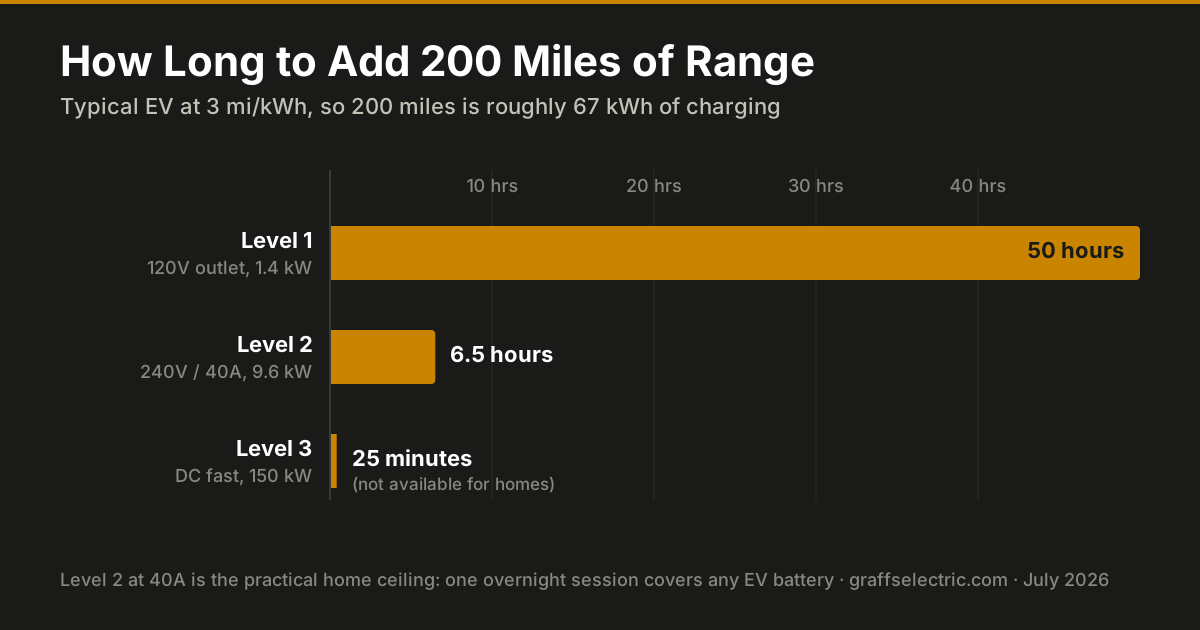
Every EV comes with a Level 1 cordset that plugs into a regular household outlet. It works, but slowly - most vehicles gain only 3 to 5 miles of range per hour of charging. For a commuter driving 30 miles a day, that means 6 to 10 hours of charging overnight just to keep up.
Level 1 is fine for plug-in hybrids with small batteries (10–20 kWh), but for a full EV with a 75–100 kWh battery, you’ll regularly wake up to a half-charged car if your schedule is anything but perfectly predictable.
Level 2 Charging (240V Dedicated Circuit)
Level 2 chargers operate on 240 volts - the same voltage as your dryer or electric range. They typically deliver 25 to 30 miles of range per hour of charging, meaning most EVs go from near-empty to full overnight regardless of the battery size.
For most Bucks County and Montgomery County homeowners with a full EV, Level 2 is the right choice. It’s faster, more convenient, and protects your battery better than repeatedly deep-cycling it with slow Level 1 charges.
What Level 2 Installation Actually Involves
Electrical Panel Assessment
Before any charger goes on the wall, an electrician evaluates your main panel. Most Level 2 chargers draw 32–48 amps continuously, which requires a 40–60 amp dedicated breaker. Older homes in Doylestown, Lansdale, or North Wales may have 100-amp panels that are already close to capacity.
If your panel is full or undersized, a panel upgrade is needed before installation. This adds cost but is non-negotiable for safe operation - and it’s often something homeowners have been putting off anyway.
Dedicated Circuit Installation
The charger needs its own circuit run from the panel to your garage or parking location. The length of that run, whether it goes through finished or unfinished space, and any conduit requirements all affect labor time and cost.
Charger Selection and Mounting
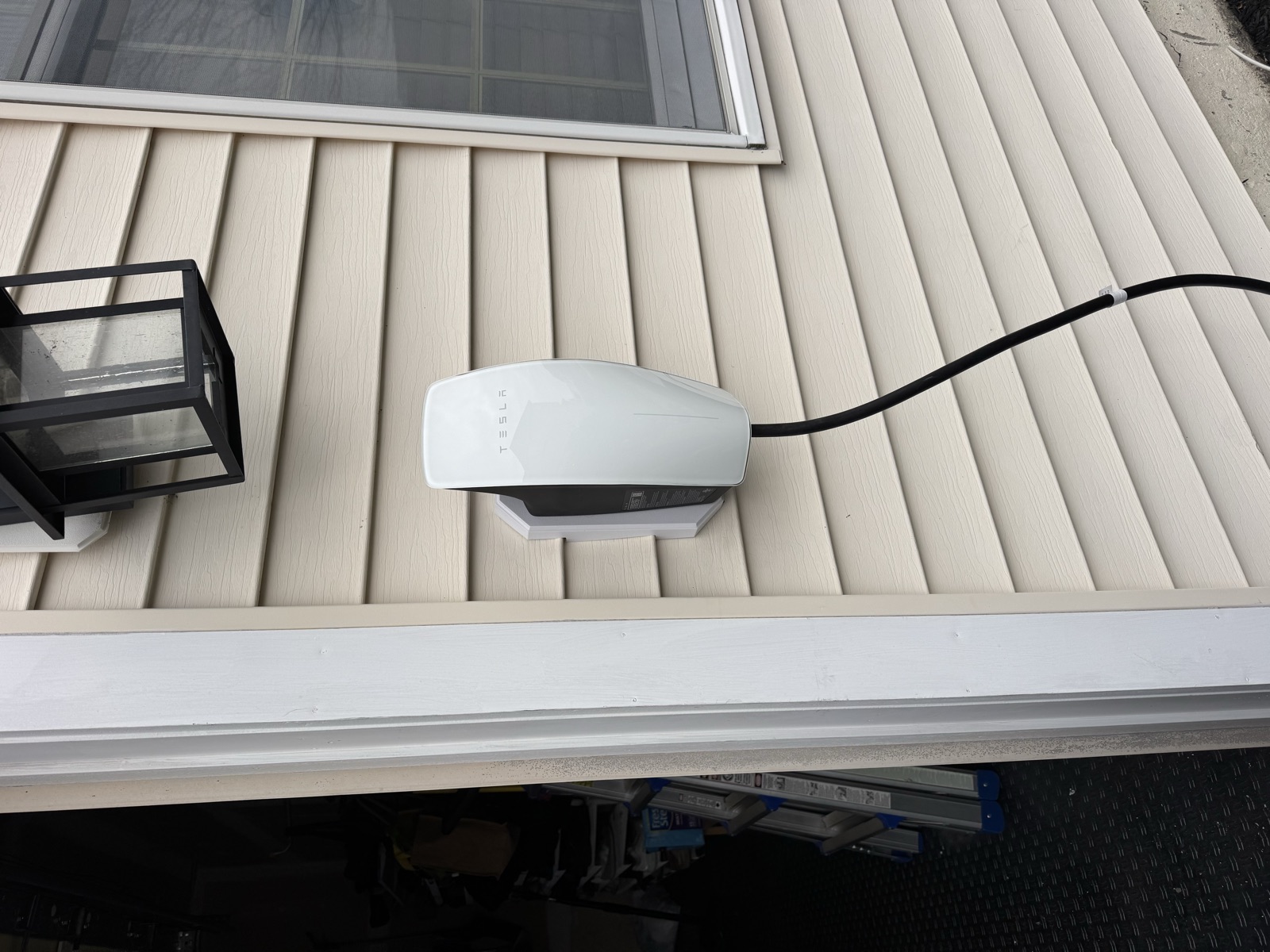
Most homeowners choose a 48-amp hardwired unit or a plug-in 40-amp EVSE mounted to the garage wall. Popular brands include ChargePoint, Enel X JuiceBox, Emporia, and Wallbox. Your electrician can advise on smart features like scheduling, energy monitoring, and app connectivity.
How Much Does EV Charger Installation Cost in PA?
Here’s a realistic cost breakdown for Bucks County and Montgomery County installations:
| Scenario | Estimated Cost |
|---|---|
| Simple install, existing panel capacity | $500–$900 |
| Install with minor panel work (breaker addition) | $900–$1,500 |
| Install requiring panel upgrade (100A to 200A) | $1,800–$3,500 |
| Outdoor or long-run installation | $1,200–$2,500 |
These ranges include labor, materials, permit, and inspection. Costs vary based on panel location, run distance, and whether conduit work is needed. Always get a written quote that includes the permit - any legitimate installer should pull one.
Pennsylvania EV Charging Incentives and Rebates
Installing a home EV charger in Pennsylvania can come with meaningful financial help:
Federal Tax Credit: The Alternative Fuel Vehicle Refueling Property Credit (30C) offers up to 30% back on equipment and installation costs (capped at $1,000 for residential) when you file your federal taxes. This credit was extended through 2032 under current law - confirm eligibility with your tax advisor.
PECO and PPL Rebates: PECO customers in eastern Montgomery County can receive rebates on Level 2 charger equipment through their EV charging programs. PPL Electric Utilities covers much of Bucks County and periodically offers similar incentives. Check directly with your utility for current program availability, as these programs open and close throughout the year.
Pennsylvania DEP: Pennsylvania’s Alternative Fuels Incentive Grant (AFIG) program has historically supported EV infrastructure. Residential eligibility varies by program cycle.
The bottom line: a $1,200 installation could realistically net you $300–$500 back through combined incentives, depending on your tax situation and utility.
Why Hire a Licensed Electrician for EV Charger Installation?
This is not a DIY project or a job for a handyman.
Safety: A 240V, 50-amp circuit carries serious risk if wired incorrectly. Improper installation can cause fires, equipment damage, or void your home insurance.
Permits and inspections: Pennsylvania municipalities require permits for new electrical circuits. An unlicensed install that never gets inspected could create problems when you sell your home or file an insurance claim.
Warranty protection: Many EV charger manufacturers and vehicle makers require professional installation to maintain warranty coverage.
Code compliance: NEC 2020 requirements for EV circuits include specific grounding, conduit, and circuit sizing standards. Licensed electricians know these requirements and follow them.
In Bucks County and Montgomery County, hiring a licensed, insured electrical contractor protects you at every level.
Planning Your Installation: Questions to Ask
Before scheduling an install, think through these points:
- Where will you park? Garage installations are easiest. Outdoor installations need weatherproof enclosures and may require longer conduit runs.
- How far is the panel from the parking spot? Every additional foot of wire run adds cost.
- Do you have a 200-amp panel? If not, budget for the possibility of an upgrade.
- Do you want smart features? Wi-Fi connected chargers let you schedule off-peak charging to save on electricity costs.
- Single or dual car family? Planning for a second charger now can save money versus retrofitting later.
FAQ
Q: Can I install a Level 2 charger in an older home with a 100-amp panel? A: It depends on your existing load. Many older homes in Bucks and Montgomery County can support a 40-amp EV charger if there’s available breaker capacity - but it needs a professional assessment. If the panel is maxed out, an upgrade is required before installation.
Q: How long does EV charger installation take? A: Most straightforward installations take 3 to 5 hours. If panel work is needed, plan for a full day. Your electrician will pull a permit and the inspection is typically scheduled separately after rough-in.
Q: Do I need a permit to install a home EV charger in Pennsylvania? A: Yes. A dedicated 240V circuit requires an electrical permit in virtually every municipality in Bucks and Montgomery County. A licensed contractor handles this for you - it’s a red flag if they don’t.
Q: What EV charger brand should I buy? A: ChargePoint, JuiceBox (Enel X), Emporia, and Wallbox are all solid choices. Your electrician can recommend a unit based on your vehicle’s onboard charger capacity, whether you want smart features, and budget. The brand matters less than the amperage and whether it’s UL-listed.
Ready to get a Level 2 charger installed at your home? Call Graff’s Electric & IT at (215) 559-1989 or visit graffselectric.com to schedule a free assessment. We serve homeowners throughout Bucks County and Montgomery County, including Warminster, Doylestown, Lansdale, North Wales, and surrounding communities.
Sponsored
Need a Licensed Electrician?
Serving Bucks & Montgomery County. Free estimates on all projects.
Get Your Free EstimateNeed Help With This?
Graff's Electric & IT Solutions is here to help with all your electrical and technology needs in Bucks & Montgomery County.