 Electrical
 Table of Contents
Power surges are one of the most underestimated threats to a modern home. Most homeowners think of surges as rare, dramatic events caused by lightning strikes - and while lightning is certainly a culprit, the vast majority of power surges actually originate inside your own home. Every time a large appliance cycles on or off - your air conditioner compressor, refrigerator, washing machine, or HVAC system - it creates a small voltage spike on your electrical system. Over time, those small surges degrade the sensitive electronics in your home: televisions, computers, smart appliances, and HVAC control boards. A whole house surge protector installation is one of the most cost-effective steps you can take to protect everything plugged into your walls. Here is exactly what the process looks like when you call Graff’s Electric & IT Solutions.
Why a Whole House Surge Protector Is Different From a Power Strip
Most homeowners have power strips with built-in surge protection on their entertainment centers and computer desks. Those point-of-use surge protectors provide a useful last line of defense, but they are not designed to handle a major surge event - and they do nothing to protect appliances that are hardwired or plugged into standard outlets elsewhere in the home.
A whole house surge protector, also called a whole home SPD (Surge Protective Device), installs directly at your electrical panel. It intercepts voltage spikes before they can travel through your wiring and reach any device in the home. When a surge arrives - whether from a nearby lightning strike, utility switching, or a large motor cycling off - the whole house device clamps the voltage and diverts the excess energy safely to ground.
Think of it as the first line of defense for your entire electrical system. Combined with point-of-use protectors at sensitive equipment, you have layered protection that covers virtually every scenario.
For homes in Bucks County and Montgomery County, where summer thunderstorm seasons are active and utility infrastructure varies across older and newer neighborhoods, whole house surge protection is genuinely practical rather than optional.
The Installation Process: Step by Step
Understanding what will happen during the installation appointment helps you prepare and set realistic expectations. Here is how a typical whole house surge protector installation unfolds when our team arrives at a home in Warminster, Doylestown, Horsham, or the surrounding area.
Step 1: Electrical Panel Assessment
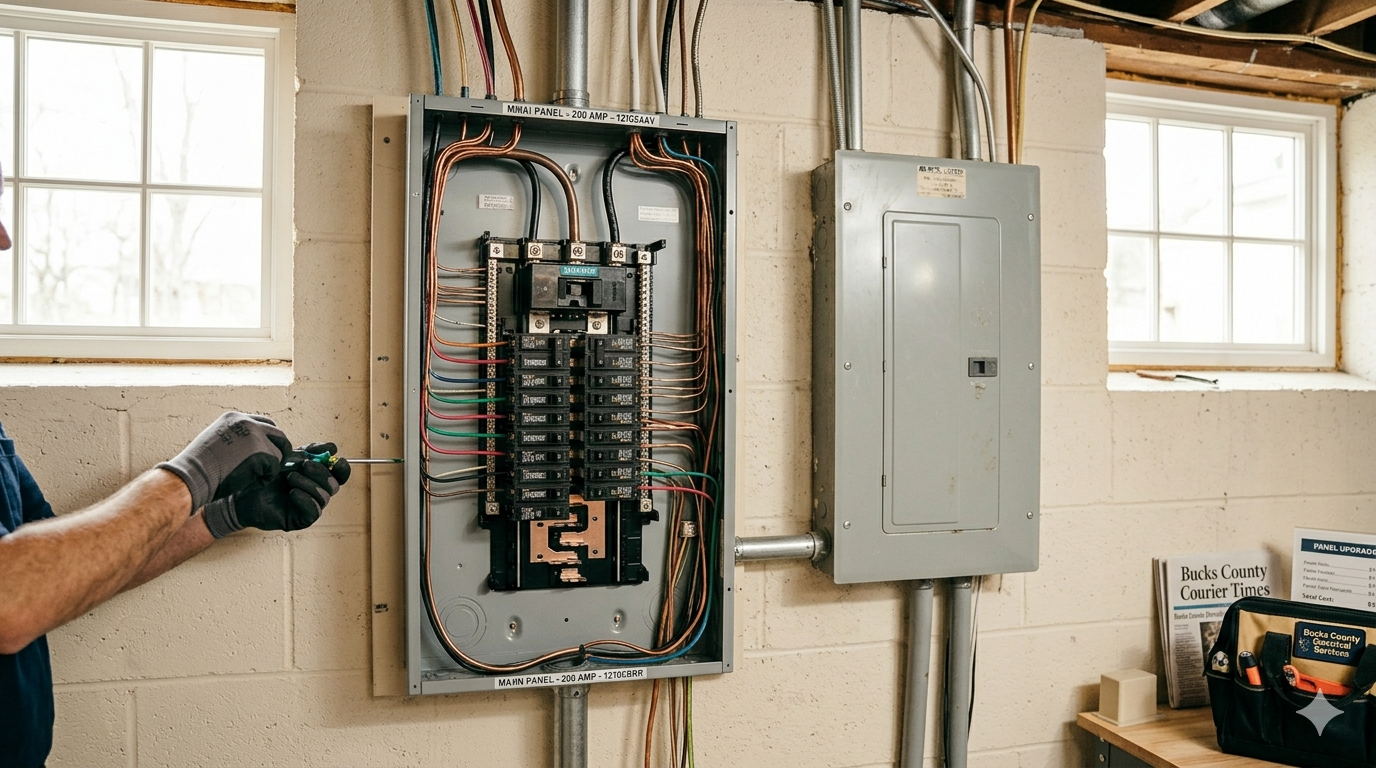
Before anything is installed, the electrician will examine your main electrical panel. The goal is to confirm that the panel is in good working condition and has space for the additional components required. Most whole house surge protectors connect to a dedicated double-pole breaker inside the main panel, so the electrician needs to verify that an open breaker slot is available. If your panel is full, adding a tandem breaker or addressing panel capacity may be part of the project.
The electrician will also look at the overall condition of the panel - checking for signs of corrosion, previous work that does not meet code, or components that need attention before adding new equipment. This is standard practice, not an upsell. A surge protector installed on a panel with existing problems is not protecting your home effectively.
Step 2: Power Shutoff
To work safely inside the electrical panel, the electrician will turn off the main breaker, cutting power to the entire home. This is brief - typically five to fifteen minutes for a straightforward installation. You should plan to have any time-sensitive tasks done before the appointment, and expect a short period without power. Battery-operated devices like phones and laptops will work fine; anything that requires a live outlet will not.
Step 3: Installing the Surge Protective Device
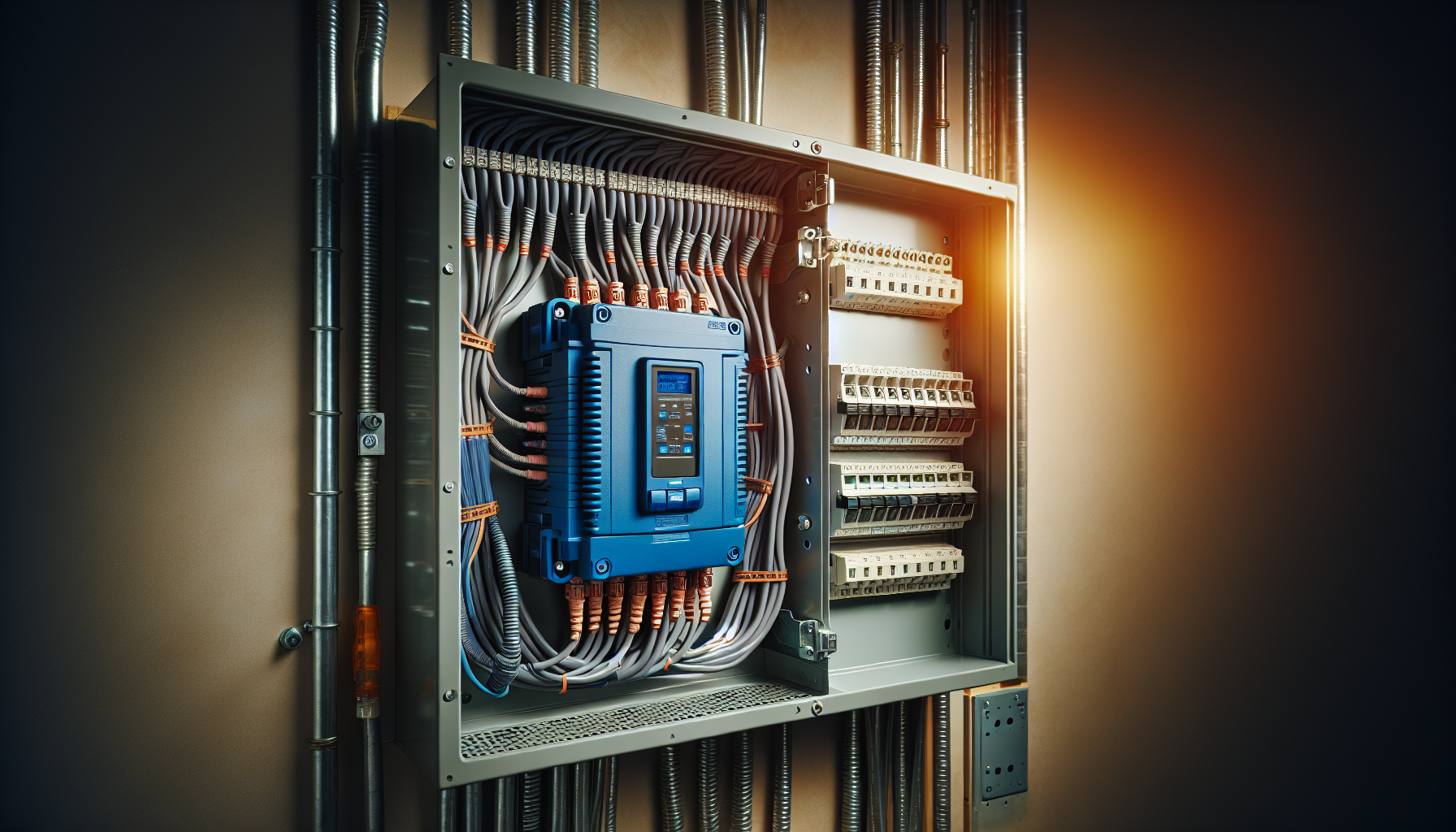
The SPD unit itself mounts either inside the panel enclosure or directly adjacent to it, depending on the model and the space available. Wires from the device connect to a dedicated double-pole circuit breaker in the panel, and a separate ground wire connects to the ground bar. The connection points are minimal and the installation is compact - a quality SPD is roughly the size of a small book.
Some premium whole house surge protectors include indicator lights or audible alarms that signal if the unit has taken a significant hit and its internal components have been depleted. This matters because surge protection devices wear out over time, especially after absorbing large events. An SPD without a status indicator gives you no way of knowing whether it is still functional.
Step 4: Testing and Verification
Once the connections are made, power is restored to the panel and the electrician verifies that the SPD is functioning properly. This includes confirming that the indicator light shows normal operation and doing a basic check of the panel’s overall function. The whole process - from arrival to completion - typically takes one to two hours for a straightforward installation.
Cost Factors for Whole House Surge Protector Installation
The cost of a whole house surge protector installation varies based on a few key factors. Understanding them helps you know what you are paying for.
The Device Itself
Whole house SPDs range from basic models to premium units with higher joule ratings, better clamping voltage, and built-in status monitoring. A higher joule rating means the device can absorb more energy before its protection components are consumed. For most homes in Montgomery County and Bucks County, a mid-tier to premium device in the $100 to $300 range offers excellent protection - the right choice depends on the value of what you are protecting and your local surge risk.
Panel Condition and Accessibility
If your panel is older, crowded, or requires a tandem breaker to make room for the SPD circuit, those factors add time and material to the job. A panel that needs cleanup before the SPD can be safely installed will affect the overall cost. An experienced electrician will tell you upfront what they find and what it means for pricing before additional work begins.
Labor
Professional installation from a licensed electrician in the Bucks County and Montgomery County area typically adds one to two hours of labor to the cost of the device. Given that improper installation of electrical panel equipment can create hazards or invalidate the device’s warranty, professional installation is the only approach we recommend.
Total installed cost for a whole house surge protector in our service area generally runs between $300 and $600 for most homes. That is a modest investment when stacked against the cost of replacing a modern HVAC system, a smart refrigerator, or a home entertainment setup.
How Long Do Whole House Surge Protectors Last?
Surge protective devices do not last forever. Each surge they absorb depletes some of their protective capacity. A device that has taken several large hits from nearby lightning activity may be exhausted and offer no real protection - even if it looks functional. Most manufacturers recommend inspecting or replacing the unit every five to ten years, or after any known major surge event.
Quality SPDs include status indicators that show whether the unit is still operational. During routine electrical work or panel inspections, your electrician should verify the SPD status as part of the checkup.
FAQ
Q: Will a whole house surge protector protect against a direct lightning strike? A: No surge protector is rated to handle a direct strike to your home’s electrical service. However, whole house SPDs are highly effective against nearby lightning strikes that send surges through the utility lines - which are far more common than direct strikes. For complete protection during electrical storms, unplugging high-value electronics remains the safest approach.
Q: Can I install a whole house surge protector myself? A: The installation requires working inside a live electrical panel, which carries serious shock and electrocution risk. It also requires permits in most municipalities and must be done by a licensed electrician to maintain homeowner’s insurance coverage and comply with local code. This is not a DIY project.
Q: Do I still need power strips with surge protection if I have a whole house unit? A: Yes. The two-layer approach - whole house SPD at the panel plus point-of-use protection at sensitive equipment - provides the most complete coverage. The whole house unit handles large surges from outside the home, while point-of-use strips catch smaller surges that originate from within the home’s wiring.
Q: Does a whole house surge protector reduce my insurance rates? A: Some homeowner’s insurance providers offer discounts for surge protection installation. Check with your insurance agent - it is worth the call, and you may need documentation of the installation from your electrician.
Ready to protect your home and everything in it? Call Graff’s Electric & IT Solutions at (215) 974-0720 or visit graffselectric.com to schedule a whole house surge protector installation. We serve homeowners throughout Bucks County and Montgomery County, including Warminster, Doylestown, Lansdale, Horsham, Hatfield, Chalfont, Newtown, and surrounding communities.
Sponsored
Need a Licensed Electrician?
Serving Bucks & Montgomery County. Free estimates on all projects.
Get Your Free EstimateNeed Help With This?
Graff's Electric & IT Solutions is here to help with all your electrical and technology needs in Bucks & Montgomery County.