 Code & Safety
 Table of Contents
Your panel is the one piece of your electrical system you almost never look at. It lives in a basement, a garage, or a hallway closet, and as long as the lights come on you forget it exists. That is exactly why panels get ignored until something goes wrong. And in a county where a huge share of the housing stock was built between the 1950s and the 1980s, “something going wrong” is more common than most homeowners want to believe.
We pull a lot of panel covers in Bucks County. Levittown, Bristol, Fairless Hills, Croydon, the older parts of Doylestown and Newtown. A good number of those homes are still running on the same service they had when Eisenhower was president. Here are the signs we tell people to actually watch for, in the order they tend to matter. Number three is the one I lose sleep over.
1. Breakers That Trip Over and Over
A breaker tripping once in a blue moon is the system doing its job. A breaker that trips every time you run the microwave and the toaster together is telling you the circuit is overloaded. That is annoying, but it is not necessarily a panel problem on its own.
The thing to watch for is the pattern. If you are resetting breakers weekly, if you have learned which appliances you “can’t run at the same time,” or if a breaker feels loose and won’t stay seated, the panel is waving a flag. Older breakers wear out. The internal mechanism that is supposed to snap open under load gets tired after thirty or forty years, and a tired breaker either trips too easily or, worse, doesn’t trip when it should. We get into the mechanics of this over in why breakers trip, but the short version is simple: chronic tripping means your demand has outgrown your supply, your breakers are aging out, or both.
2. A Warm Panel, Buzzing, or a Burning Smell
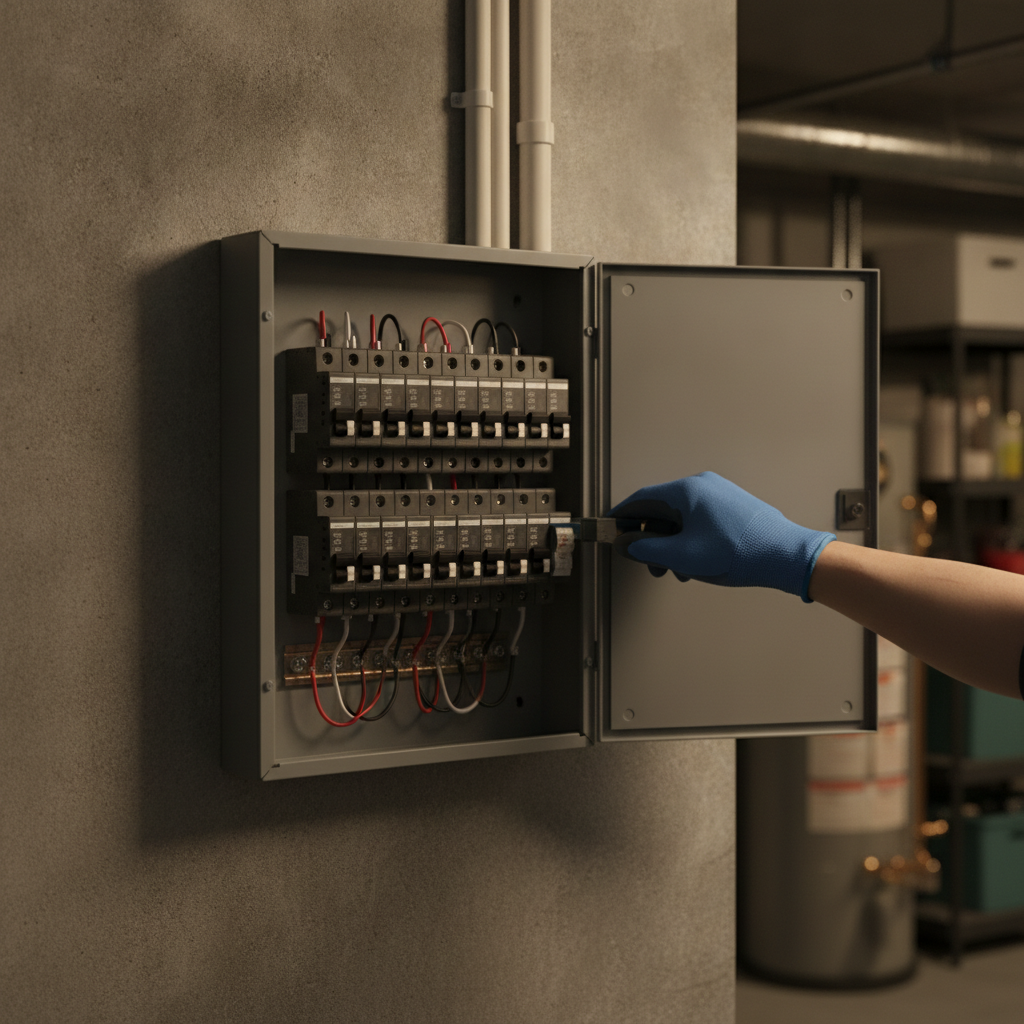
Walk up and put the back of your hand near your panel cover. It should be room temperature. If the metal feels warm, that is heat from loose connections or overloaded busbars, and heat inside a panel is how electrical fires start. A faint buzzing or sizzling sound is the same story. Electricity should be silent.
The one that should send you to the phone immediately is any smell of hot plastic or scorching near the panel or your outlets. That odor means something is already burning, even if you can’t see flames. We have opened panels to find melted breaker bases and bus bars discolored brown from years of slow cooking. If you ever catch that smell, kill the main breaker if you can reach it safely and call a licensed electrician the same day. This is not a “next week” problem. While we are on the subject, a burning smell at your outlets deserves the same urgency.
3. You Have a Federal Pacific or Zinsco Panel (Don’t Ignore This One)
Here is the one that worries me most, and the reason it is number three is so it sits right in the middle where you can’t skim past it. If your home was built or rewired roughly between the mid-1950s and the early 1980s, there is a real chance you have a Federal Pacific Electric (FPE) Stab-Lok panel or a Zinsco panel sitting on your wall. These were installed in millions of American homes, including plenty here in lower Bucks, and both brands have a documented history of breakers that fail to trip during an overload or a short.
Think about what that means. The breaker is the safety device. It is supposed to cut power before a wire overheats and ignites. When an FPE or Zinsco breaker fails to trip, the overload just keeps cooking the wire behind your walls, with nothing standing in the way. Independent testing found FPE Stab-Lok breakers failed to trip at a rate far higher than anything you’d accept from a safety device, and Zinsco panels are known for breakers that weld themselves to the bus. You cannot fix this with a new breaker, because the failure is baked into the design and the worn bus bar itself.
How do you know? Pop the cover off the outer door, not the panel itself, and look for the name. “Federal Pacific,” “FPE,” or “Stab-Lok” on the panel or breakers. “Zinsco,” “Sylvania-Zinsco,” or thin breakers with colored handles. If you find one of those names, I’m not going to sugarcoat it: that panel should be replaced, not because we want to sell you one, but because the device protecting your house has a track record of not protecting it. Honestly, if I had one in my own home, I’d swap it before I touched anything else on this list.
4. You’re Still on 100-Amp Service (or Less)
Decades ago, 100-amp service was plenty. A house had a furnace, a fridge, some lights, and maybe a window AC unit. The modern home is a different animal. Central air, an electric range, a heat pump, a hot tub, a couple of big TVs, and now an EV charger pulling 40-plus amps for hours at a stretch. Add it up and 100 amps gets tight fast.
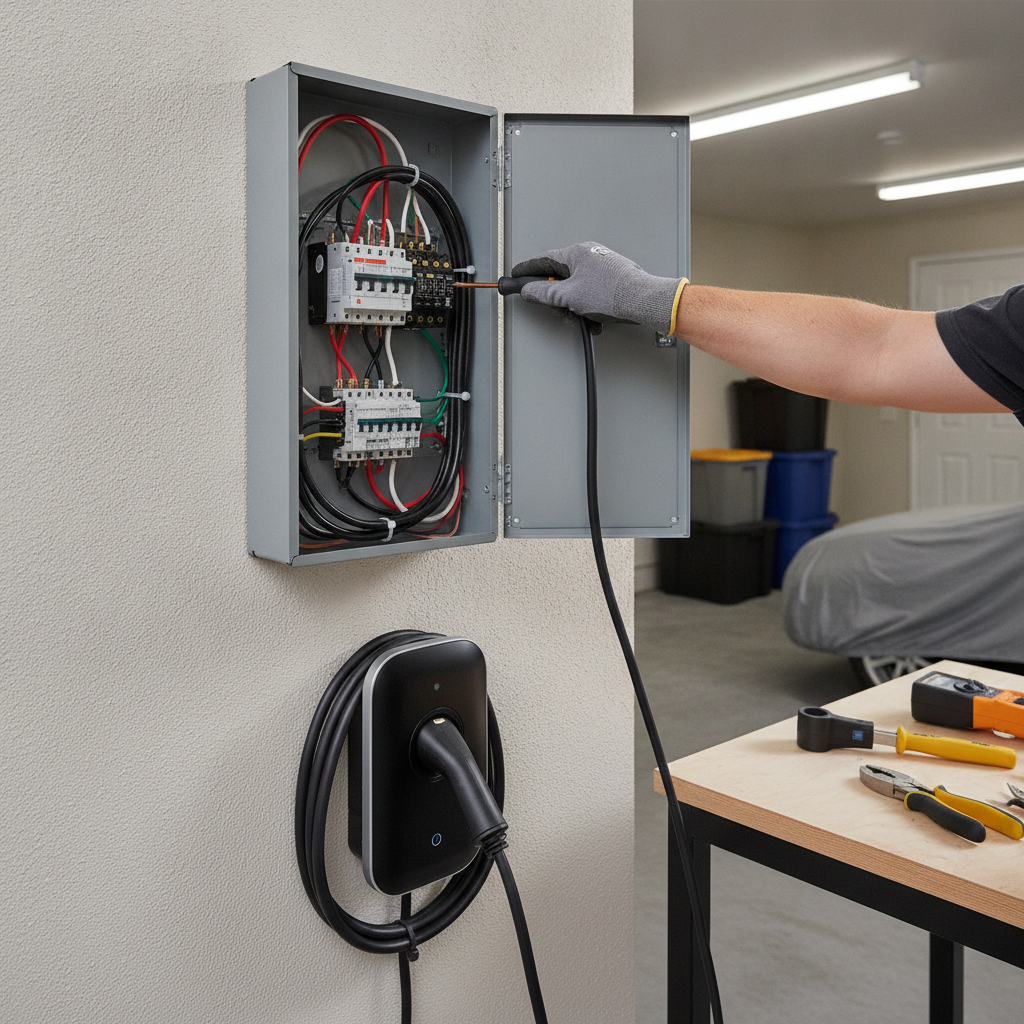
If you’ve ever priced out an EV charger or a heat pump and been told “you’ll need to upgrade your service first,” this is why. We run a load calculation to see what your house actually demands versus what your panel can deliver, and on a lot of older Bucks County homes the answer is that 100A simply doesn’t have the headroom. Upgrading to 200-amp service is the standard move, and it opens the door to everything you’ve been wanting to add. If you’re weighing a charger specifically, our breakdown of the 2026 NEC EV outlet rules for Bucks County explains why new circuits and panel capacity go hand in hand. And panel upgrades aren’t just an old-home problem, either; growing households outgrow newer panels too.
5. Fuses Instead of Breakers, or a Panel Full of Tandems
If you open your panel and see screw-in fuses instead of flip-switch breakers, you’re looking at technology that predates most of the people reading this. Fuse boxes aren’t automatically dangerous, but they’re a sign the electrical system hasn’t been touched in a very long time, and they make it far too easy to “fix” a blown fuse by jamming in a bigger one, which defeats the entire safety purpose.
The subtler version is a breaker panel that’s completely full, with tandem (skinny double) breakers crammed into every slot to squeeze in more circuits than the box was designed for. When there’s no room left to add a circuit safely, every new project means another workaround, and workarounds in a panel add up to heat and risk. A panel that’s maxed out is a panel that’s quietly telling you it’s undersized for how you live now.
6. The Panel Is Just Plain Old, and Nobody’s Looked
Electrical panels don’t last forever. Most have a service life in the neighborhood of 25 to 40 years, and a lot of Bucks County panels are well past that. Even a healthy-looking older panel can hide corroded bus bars, backed-out connections, and breakers that have lost their snap. You won’t see it from the outside.
If you’ve bought an older home recently and have no idea how old the panel is, or it’s been thirty-plus years since anyone qualified looked inside, that alone is reason for an inspection. Code violations also pile up over the decades as homeowners and handymen add circuits, and the top electrical code violations we find in older homes almost always trace back through the panel.
What an Upgrade Actually Costs, and Why It’s Worth It
Let’s talk numbers, because everyone wants to know. As of 2026, a straightforward panel upgrade in Bucks County typically runs somewhere in the $1,800 to $3,500 range, with most 200-amp service upgrades landing in the middle of that. The spread depends on whether the meter and service entrance need work, how the grounding looks, and whether the utility has to get involved with the drop. A bare panel swap is on the low end; a full service upgrade with a new mast and meter is on the high end. Rising copper costs have nudged these numbers up over the past year, so a quote from two years ago won’t hold. If you want a deeper look at what drives the figure, our panel upgrade cost guide for Bucks County lays it out line by line.
What you get for that money is the part that’s easy to undervalue: a panel where the breakers trip when they’re supposed to, the capacity to add the things modern life runs on, and a safety device you can actually trust. That’s not a luxury upgrade. It’s the foundation everything else in your house plugs into.
Panels rarely fail politely. They give you the warning signs on this list first, and the homes that get hurt are almost always the ones where somebody noticed a warm cover or a chronic trip and decided to deal with it later. If anything here sounds like your house, especially if you found one of those Federal Pacific or Zinsco labels, get a licensed set of eyes on it. Reach out to Graff’s Electric for a panel inspection and we’ll tell you straight whether you’ve got years left or a problem that won’t wait. No pressure, just an honest read from people who do this every day.
Sponsored
Need a Licensed Electrician?
Serving Bucks & Montgomery County. Free estimates on all projects.
Get Your Free EstimateNeed Help With This?
Graff's Electric & IT Solutions is here to help with all your electrical and technology needs in Bucks & Montgomery County.