 IT & Networking
 Table of Contents
If your business is running on a router you picked up at Best Buy or borrowed from your home office, you are not alone - but you are running a risk. Consumer-grade networking equipment is designed for one thing: simplicity. It is easy to set up, cheap to buy, and adequate for streaming movies and browsing from a couch. The moment you introduce multiple employees, cloud applications, VoIP phones, credit card processing, and wireless access across a commercial space, that consumer router becomes the weakest link in your entire operation. Commercial network installation is not a luxury reserved for large corporations. It is a foundational investment every serious business in Bucks County and Montgomery County should be making.
Why Consumer Routers Fail in Business Environments
Walk into almost any small office in Warminster or Lansdale and you will find a consumer router jammed into a corner, blinking away, struggling to handle a load it was never designed for. Here is why that matters.
They Cannot Handle Traffic Volume
Consumer routers are designed for a household - maybe five to ten devices running sporadically. A business with fifteen employees, each running a laptop, a phone, and accessing cloud services simultaneously, can easily saturate a consumer router’s processing capacity. The result is slowdowns, dropped connections, and frustrated employees who waste time waiting for files to load.
They Offer No Quality of Service Controls
In a business, not all traffic is created equal. A VoIP call needs consistent, low-latency bandwidth to stay clear. A file download can wait. Consumer equipment treats everything the same. Commercial routers and firewalls include Quality of Service (QoS) controls that prioritize business-critical traffic, keeping your phone calls clear and your applications responsive even when the network is busy.
They Have No Centralized Management
When something goes wrong with a consumer router, your options are limited to unplugging it, logging into a basic web interface, or calling your ISP. Commercial networking equipment - from vendors like Cisco Meraki, Ubiquiti UniFi, and Fortinet - includes management platforms that let your IT provider monitor the network remotely, push configuration changes, identify problems before they affect users, and generate reports on usage and performance.
Security Is an Afterthought
Consumer routers receive irregular firmware updates and offer minimal security features. Commercial firewalls include intrusion detection, content filtering, VPN support, and automated threat response. For businesses in Bucks County and Montgomery County that handle customer data, payment information, or any regulated data, the security gap between consumer and commercial equipment is significant.
What Commercial Network Installation Actually Looks Like
A proper commercial network installation involves more than swapping out a router. It is a structured process that begins with understanding how your business actually uses its network.
Network Assessment and Design
The first step is a site survey and needs assessment. How many users? How many devices per user? What applications are business-critical? Where do employees need wireless coverage? Are there dead zones in your facility? This information drives the network design - determining what hardware is needed, where access points go, how VLANs should be configured, and how the whole system ties together.
For businesses across Hatfield, Chalfont, and Horsham, the physical layout of the space plays a big role in access point placement. A single access point almost never provides adequate coverage for a commercial space - and putting one in the center of the ceiling and hoping for the best is a recipe for dead zones and complaints.
Structured Cabling and Physical Infrastructure
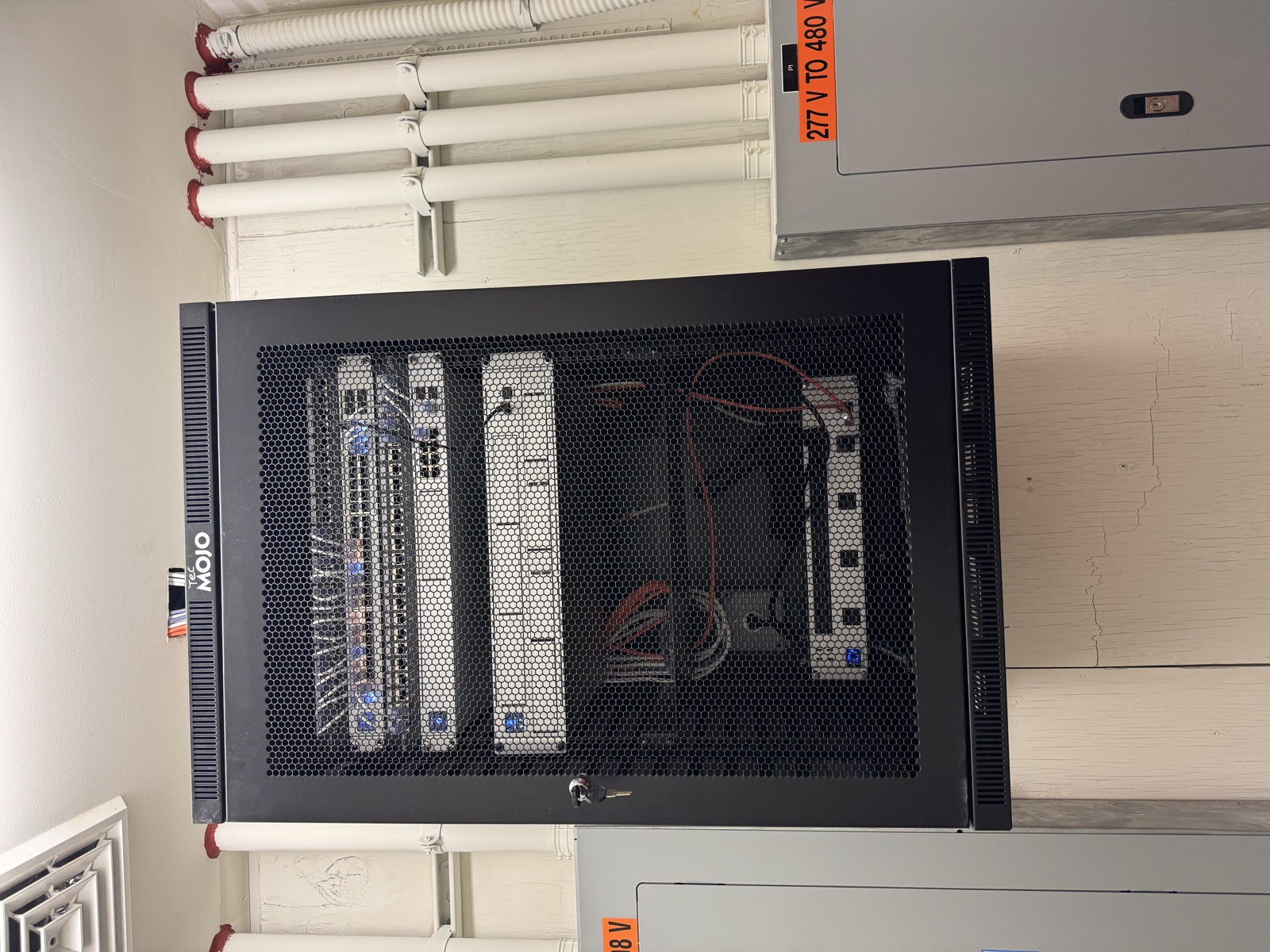
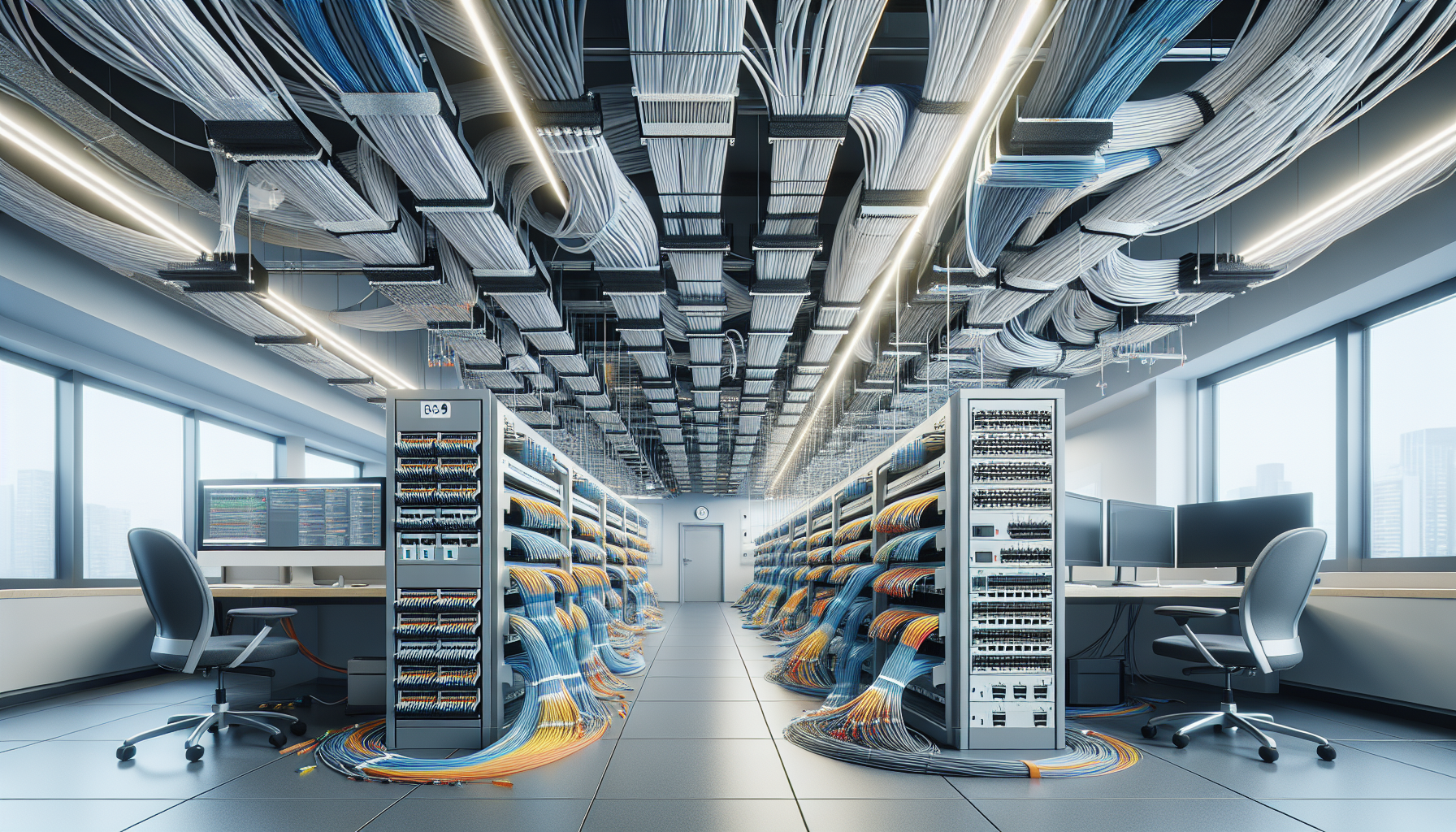
Commercial networking starts with cable. Cat6 or Cat6a runs to each access point, network drop, and wired device provide the backbone that wireless connections depend on. Wireless is always built on top of wired infrastructure, not instead of it. Properly terminated, labeled, and tested cabling in a patch panel and rack creates a system that is organized, expandable, and maintainable.
Firewall, Switching, and Wireless
A commercial firewall sits at the network perimeter, controlling what traffic is allowed in and out. Managed switches connect wired devices and network segments. Commercial wireless access points - ceiling-mounted, wall-mounted, or outdoor - provide consistent, high-capacity wireless coverage across the entire space.
VLAN segmentation keeps different types of traffic separated: employee devices on one network, guest Wi-Fi on another, security cameras on a third. This is standard practice in commercial environments because it improves both performance and security.
The Real ROI of Commercial Network Installation
The upfront cost of commercial network installation is higher than dropping a consumer router on a shelf. A properly designed system for a small to mid-size business in Montgomery County might run anywhere from $3,000 to $15,000 depending on the size of the space, number of users, and complexity of the design. That number makes some business owners hesitate. Here is how to think about the return.
Downtime Is Expensive
Every hour your team cannot work because the network is down has a cost. If you have ten employees each earning $25 per hour and the network goes down for three hours, that is $750 in lost productivity before you even start counting customer impact. Consumer equipment that fails regularly - or that nobody knows how to troubleshoot - turns into a recurring expense in lost time.
Remote Management Prevents Problems
Commercial systems monitored by an IT provider catch problems before they cause outages. A managed firewall that flags unusual traffic at 2:00 AM and blocks it automatically is worth far more than the hardware cost if it prevents a breach.
Scalability Saves Money Long-Term
A properly designed commercial network can grow with your business. Adding employees, a new office wing, or additional devices does not require replacing everything - you add access points, switch ports, or licenses to the existing system. Consumer equipment just gets replaced when it cannot keep up.
Commercial Networking in Bucks County and Montgomery County
Businesses in Doylestown, Newtown, Warminster, Lansdale, Horsham, and across Bucks County and Montgomery County face the same networking challenges as businesses everywhere - but with the added variable of regional internet infrastructure, mixed-age commercial buildings, and offices that were not designed with modern wireless in mind.
Graff’s Electric & IT handles commercial network installation from the cable in the walls to the management software on the screen. We design systems, pull the structured cabling, install and configure the equipment, and provide ongoing support. We are not a big-box reseller - we are a local contractor who will be here when you call.
FAQ
Q: How is commercial networking equipment different from what I buy at a consumer store? A: Commercial equipment is designed for higher user counts, continuous operation, centralized management, and enterprise-grade security features. Brands like Ubiquiti UniFi, Cisco Meraki, and Fortinet offer hardware and software platforms built specifically for business environments. Consumer routers from the same manufacturers look similar but are fundamentally different in capability.
Q: Do I need structured cabling if I just want better Wi-Fi? A: Yes. Commercial wireless access points need wired backhaul connections to deliver consistent performance. Running wireless access points without proper cabling is like widening a highway that feeds into a one-lane bridge - the bottleneck is still there. Good wireless starts with good cable.
Q: How long does a commercial network installation take? A: A small office installation - cabling, firewall, switches, and access points - typically takes one to three days depending on the size of the space and how much cable needs to be run. Larger or more complex projects take longer. We provide a detailed project timeline before work begins.
Q: Can you upgrade our existing network rather than replacing everything? A: Often yes. We assess what you have, identify what is worth keeping, and build from there. Sometimes the cable infrastructure is fine and only the active equipment needs replacing. We will give you an honest assessment before recommending anything.
Ready to stop fighting your network and start relying on it? Call Graff’s Electric & IT Solutions at (215) 974-0720 or visit graffselectric.com to schedule a free commercial network assessment. We serve businesses throughout Bucks County and Montgomery County, including Warminster, Doylestown, Lansdale, Horsham, Hatfield, Chalfont, Newtown, and surrounding communities.
Sponsored
Need a Licensed Electrician?
Serving Bucks & Montgomery County. Free estimates on all projects.
Get Your Free EstimateNeed Help With This?
Graff's Electric & IT Solutions is here to help with all your electrical and technology needs in Bucks & Montgomery County.